
Introduction
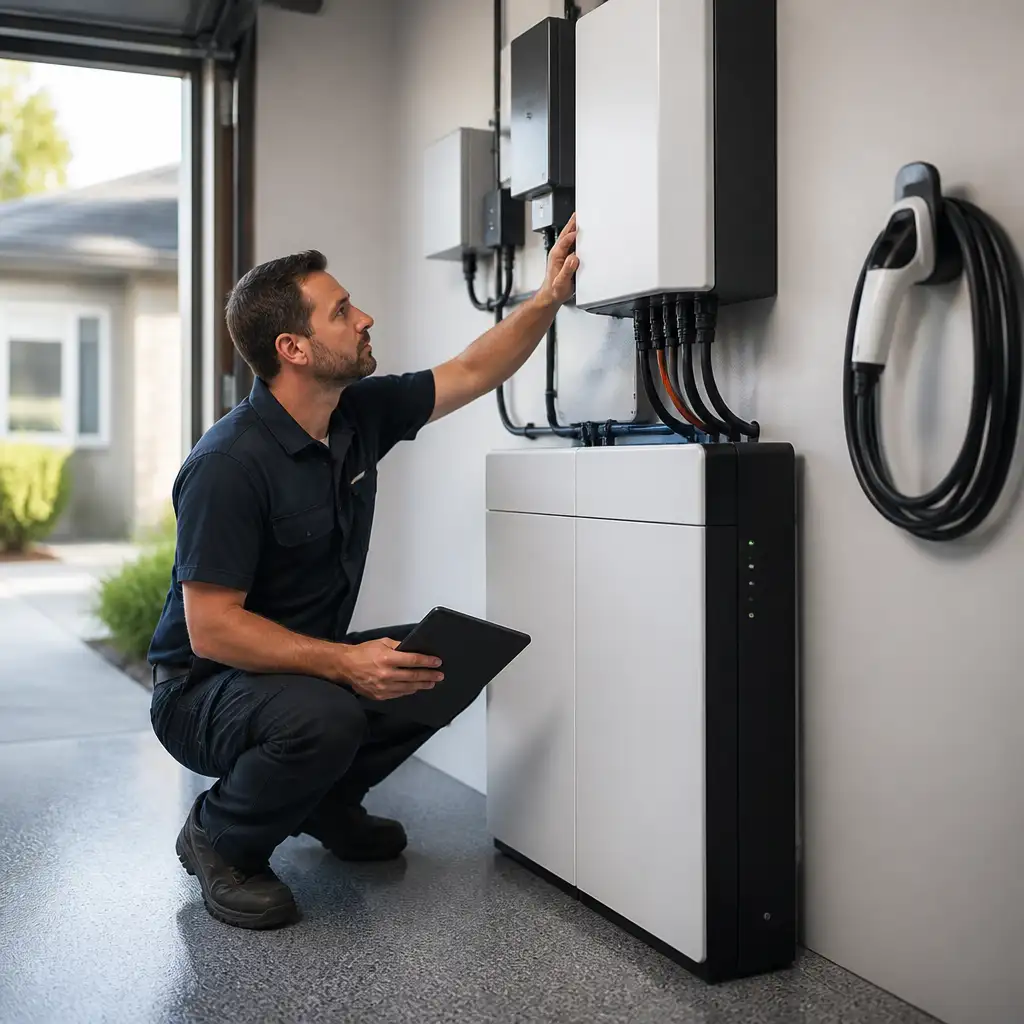
Homeowners around Lake Norman and Cornelius, NC increasingly choose electric vehicles and consider pairing EV charging with rooftop solar or home battery storage. Planning ahead helps you get reliable charging, avoid unexpected electrical upgrades, and use renewable energy efficiently. If you’re exploring EV charger installation Lake Norman NC, this article explains practical choices and when to call licensed professionals.
This guide covers the main technical and practical considerations for Lake Norman area homes: how solar and batteries change charging patterns, smart chargers and scheduling, export limits imposed by utilities, tradeoffs to avoid panel upgrades, and when to involve an electrician or solar professional. It’s written for homeowners, small business owners, and builders who want clear, safety-focused guidance.
ElecTek is a licensed, insured, and bonded electrical contractor based in Cornelius, NC that serves Greater Lake Norman homeowners. We emphasize code-compliant work and practical planning—EV charging and energy storage projects are safest and most successful when coordinated between electrical and solar professionals.
- Introduction
- How rooftop solar and home batteries change EV charging dynamics
- Smart chargers, charge scheduling, and time-of-use rates
- Export limits, utility rules, and grid interactions
- Avoiding costly panel upgrades: tradeoffs and alternatives
- Charger placement, wiring, and why a licensed electrician matters
- Coordinating with solar installers and when to involve pros
- Frequently Asked Questions
How rooftop solar and home batteries change EV charging dynamics
Rooftop solar and home battery systems alter the timing and source of electricity you use to charge an EV. During sunny hours, a solar array can supply a large portion of charging load, reducing grid energy use and lowering operating costs. A battery can store midday solar production for overnight charging or provide a dedicated source during peak-rate periods.
For Lake Norman homeowners, the combination of solar and a battery can reduce reliance on time-of-use grid rates and provide backup power during outages. However, the presence of solar and batteries also introduces coordination needs: an EV charger, inverter settings, battery controller, and possibly your utility’s export policies must all be factored into a plan.
Early planning avoids surprises. When evaluating options, look at expected daily driving needs, typical sun hours on your roof, and whether you prefer daytime fast charging from solar or storing solar for night charging. For a realistic assessment and safe installation, consider professional electrical contracting services that include EV charger installation and panel evaluation.
Smart chargers, charge scheduling, and time-of-use rates
Smart EV chargers are key to optimizing a solar-plus-storage home. They can schedule charging to times when solar production or battery state-of-charge is highest, or when utility rates are lowest. Many smart units integrate with home energy systems and let you set charging windows or limits based on available solar power.
Time-of-use (TOU) rates and demand charges from utilities affect the economics of charging. In North Carolina, some utilities offer TOU pricing or incentives that make off-peak charging attractive. A smart charger configured to avoid peak-rate hours can lower monthly costs and reduce stress on your electrical service.
When you plan, ask whether your chosen charger supports modes such as solar-only charging, scheduled charging, and load management. These functions help avoid overloading the home circuit and maximize onsite renewable energy use without risking code or warranty issues.
Export limits, utility rules, and grid interactions
Many utilities place limits on how much energy a solar system can export to the grid. Export limits and interconnection rules matter when using solar to charge an EV because they influence whether excess solar is pushed back to the grid or must be curtailed. In some cases, export restrictions affect whether on-site energy is available for immediate charging.
Before finalizing a plan, check local utility interconnection rules and whether a net metering arrangement, export cap, or standby charge applies in your area. For Lake Norman and Cornelius homeowners, talking with your solar installer and utility early avoids configuration issues later during EV charger installation Lake Norman NC projects.
Export limits sometimes mean a battery is more valuable than a larger solar array: the battery can store excess generation that would otherwise be curtailed. Understanding these tradeoffs helps you size solar and batteries to meet EV charging needs without violating utility or inverter constraints.
Avoiding costly panel upgrades: tradeoffs and alternatives
One common homeowner concern is whether an EV charger or added solar will force a main panel or service upgrade. While some homes do need a panel or service increase, there are strategies to avoid costly upgrades. These include smart charger load management, adding a subpanel, or coordinating charging times with lower household load.
Tradeoffs include limiting maximum EV charging power (for example choosing a 32A charger instead of 48A) or using the battery to smooth demand peaks. These approaches can keep total simultaneous load within existing service capacity. However, limitations should be assessed by a licensed electrician who can model load and advise on NEC-compliant solutions.
If a panel upgrade is necessary, it’s often driven by multiple recent additions—new HVAC equipment, electric range, or planned high-load devices—rather than just the EV charger. A careful evaluation in Cornelius and Lake Norman homes will clarify whether a tradeoff makes sense or a safe panel upgrade is the prudent path.
Charger placement, wiring, and why a licensed electrician matters
Where you place an EV charger affects convenience and installation complexity. Garages, carports, and exterior walls near where you park are common choices. Proper placement considers cable reach, weather protection, and routing for a safe, code-compliant dedicated circuit.
Wiring for a Level 2 charger typically requires a dedicated circuit and properly sized breaker and conductors. Junction points, conduit runs, and mounting locations must comply with the National Electrical Code and local inspection rules. That’s why EV charger work should be performed by a licensed electrical contractor—incorrect wiring can create safety risks and inspection failures.
ElecTek’s residential experience in Cornelius and the Greater Lake Norman area includes planning placement, obtaining permits when required, and installing chargers to meet code and homeowner needs. If you want to schedule a site visit, you can book an appointment to discuss specifics and get an informed recommendation.
Coordinating with solar installers and when to involve pros
Integrating an EV charger with an existing or planned solar and battery system requires coordination. Solar inverters, battery charge controllers, and EV charger settings can interact in ways that are best resolved before installation. For example, inverter export settings may need adjustment, and battery controllers may require programming to prioritize vehicle charging or home backup.
In many projects, a collaborative approach between a licensed electrician and the solar contractor yields the best result. The electrician assesses home wiring and service capacity while the solar professional configures inverters and batteries. This coordination reduces surprises and keeps the system safe and compliant with utility and inspection requirements.
When in doubt, involve professionals early. ElecTek works with builders and solar teams to provide practical electrical planning for EV charging, panel upgrades, and battery interconnection. If you need help planning or want to contact our team about a combined solar and EV project, we’re available to discuss options.
Frequently Asked Questions
Q: Do I need a panel upgrade to install a Level 2 EV charger at my Lake Norman home?
A: Not always. Many homes can support a Level 2 charger with careful load evaluation, smart charging schedules, or by limiting charger amperage. A licensed electrical contractor should evaluate household load, existing appliances, and any planned electrical additions to determine whether a panel or service upgrade is required.
Q: Can my solar panels charge my EV directly during the day?
A: Yes—solar can supply EV charging when generation is available, especially with a smart charger that prioritizes solar. Export limits, inverter settings, and battery storage configuration affect how much solar you can use immediately, so coordinate with your solar installer and electrician for optimal settings.
Q: When should I involve both an electrician and a solar professional for an EV charging project in Cornelius or Lake Norman?
A: Involve both before equipment is purchased or installed. Early coordination ensures the EV charger, inverter, and battery controller are compatible, keeps the project code-compliant, and helps avoid panel or service surprises. Licensed pros can also advise on local utility rules and permitting.
Planning an EV charger, generator, renovation, or electrical upgrade? ElecTek helps homeowners throughout Cornelius, NC and the Lake Norman area make safe, code-conscious electrical decisions. Call 704-506-4205 or email trish@electekinc.com to discuss your project.