
Introduction
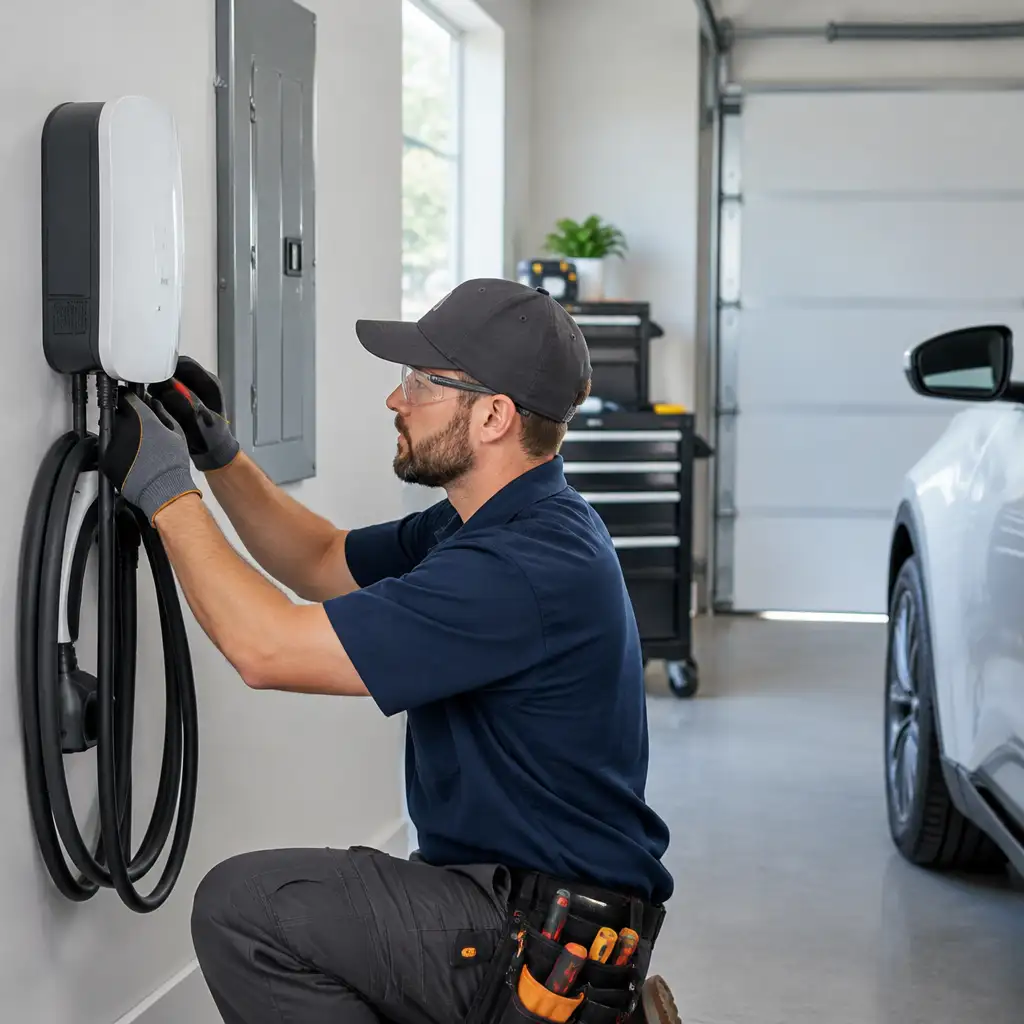
Electric vehicles are increasingly common in Cornelius, NC and the Greater Lake Norman area, and adding a home charging station is one of the first upgrades many homeowners consider. Before scheduling an EV charger installation Cornelius NC homeowners should understand how time-of-use (TOU) electricity rates, smart charger scheduling, and home electrical capacity will influence monthly costs and the charger you choose.
This article explains what TOU rates mean for residential charging, how smart charging schedules can cut costs, and the electrical considerations—like panel capacity and dedicated circuits—that affect installation. We focus on practical homeowner decisions and safety-first guidance so you can plan a smart, code-conscious installation for your Lake Norman home.
Throughout the guide we’ll point out when to call a licensed electrician, what questions to ask during planning, and which ElecTek services help streamline installation and ensure National Electrical Code compliance. If you’re researching EV charger options, these insights will help you compare chargers, estimate monthly charging costs, and determine whether an electrical upgrade is necessary.
- Introduction
- How time-of-use electricity rates affect your monthly charging cost
- Choosing a smart charger: scheduling features and compatibility
- Panel capacity, dedicated circuits, and when to plan for upgrades
- How smart charging schedules lower demand charges and peak use
- Home energy management: solar, storage, and EV charging coordination
- Permits, code compliance, and when to call a licensed electrician
- Frequently Asked Questions
How time-of-use electricity rates affect your monthly charging cost
Time-of-use (TOU) rates are utility pricing structures that change the cost of electricity depending on the time of day. In many parts of North Carolina, utilities offer TOU plans that make electricity cheaper during off-peak hours—typically overnight—and more expensive during weekday afternoons and early evenings. For EV charging, that means when you charge can have a direct impact on your monthly bill.
For Cornelius homeowners, understanding your local utility’s TOU periods is an important first step. Charging an EV during off-peak hours can reduce per-kWh costs significantly compared with charging during peaks. If your household has flexible schedules, shifting charging to late-night or early-morning hours is often the simplest way to lower costs without additional equipment.
However, TOU plans vary. Some apply demand charges or higher on-peak rates that affect households differently. Before committing to an EV charger purchase, check your utility’s TOU schedule and run a rough estimate of how many miles you drive and how many kWh you’d need per month. That estimate helps you predict monthly charging costs under different TOU scenarios and choose the right charger and schedule.
Choosing a smart charger: scheduling features and compatibility
Smart chargers add scheduling, monitoring, and sometimes load-management features that make it easier to take advantage of TOU rates. When evaluating smart chargers, look for simple scheduling options (set-it-and-forget-it nightly charging), utility rate integration, and remote control through a smartphone app or web portal. These features let you automatically start charging at the cheapest times without manual intervention.
Compatibility matters: ensure the charger supports your vehicle’s charge rate, the home’s available circuit, and the charging standards used by your EV. Some smart chargers also offer power-sharing or dynamic load balancing—useful if multiple EVs or high-draw appliances are on the same electrical service. If you plan to integrate solar or battery storage later, choose a charger that supports those configurations or can be upgraded.
When shopping for a smart charger, consider ease of use and reliability in addition to advanced features. A user-friendly schedule interface and reliable firmware updates matter for homeowners who want consistent savings without managing complex settings. For installation and product selection help, ElecTek provides EV charger installation and can recommend models that match your home’s electrical setup and charging goals. See our EV charger installation options for more details.
Panel capacity, dedicated circuits, and when to plan for upgrades
Most Level 2 home chargers require a dedicated 240V circuit, typically 30 to 60 amps depending on the charger and the vehicle’s onboard charger. Your home’s electrical panel must have enough capacity and available breaker spaces to add that dedicated circuit safely. In many Lake Norman area homes, older panels or homes with many high-demand appliances may need an upgrade or service assessment before installation.
A licensed electrician will evaluate panel capacity by looking at service size (for example 100A or 200A), the existing load, and available breaker positions. If the panel is close to capacity or has limited space, options include installing a subpanel, freeing up spaces by consolidating circuits, or upgrading the main service. Planning for a potential panel upgrade early prevents surprises and ensures the new charger operates safely and reliably.
ElecTek recommends homeowners consider future needs—additional EVs, heat pumps, or a backup generator—when deciding whether to upgrade. An upfront panel upgrade can be more cost-effective than repeated retrofits. For professional assessment and installation, schedule a service visit so a licensed, insured, and bonded electrician can review your specific requirements and provide a code-conscious plan.
How smart charging schedules lower demand charges and peak use
Smart charging can reduce both energy costs and peak demand by timing charging sessions for off-peak hours and smoothing charging rates. Instead of charging at maximum power as soon as the EV is plugged in, smart chargers can ramp up or taper power to avoid spikes that increase demand on your home service during peak utility periods.
For homeowners on TOU plans, scheduling charge starts after midnight or in other low-rate windows is a straightforward approach. More advanced strategies use rate-aware algorithms that automatically shift charging based on the utility’s price signals. These techniques are especially useful for households that also run high-demand appliances in the evening, like electric ovens or HVAC systems—smart scheduling reduces the chance of overloading circuits and can avoid expensive peak-period energy.
Remember that lowering monthly energy costs is about both kWh price and how you use power across the day. Smart chargers combined with modest behavioral changes—like avoiding simultaneous high-load activities during peak times—can provide meaningful savings and a more resilient home electrical environment. For help configuring a schedule that fits your lifestyle and utility plan, a consultation with a licensed electrician can identify the best settings and any necessary service adjustments.
Home energy management: solar, storage, and EV charging coordination
Many Cornelius and Lake Norman homeowners are considering solar panels and battery storage alongside EV charging. Coordinating these systems gives you flexibility to charge your EV with lower-cost solar energy during the day or draw from batteries during evening peaks. Integration requires compatible inverters, chargers, or an energy management system that can prioritize loads safely.
If you already have—or plan to install—solar and storage, select a smart charger that supports utility and energy-management integration. Some systems enable charging directly from solar during daytime hours or use stored energy at night to avoid high TOU on-peak rates. That coordination can reduce grid electricity purchases and improve overall efficiency, but requires professional design to ensure safe operation and NEC-compliant interconnections.
ElecTek works with homeowners and builders to plan electrical infrastructure for solar, storage, and EV charging. Early coordination during remodels or new construction ensures proper conduit, panel space, and transfer equipment are in place. If you’re interested in a combined approach, consider booking a site visit so a licensed electrician can review your property’s potential and recommend a practical, code-compliant setup.
Permits, code compliance, and when to call a licensed electrician
EV charger installations typically require local permits and must comply with the National Electrical Code and local inspection requirements. A licensed electrician will handle permit paperwork, sizing of equipment, and installation to meet NEC standards and local jurisdiction rules in Cornelius, NC. Permits protect homeowners by ensuring installations are inspected and meet safety standards.
Call a licensed electrician whenever the project involves new circuits, panel modifications, service upgrades, rooftop or exterior conduit runs, or any work you cannot verify as safe. Avoid DIY attempts at wiring or breaker changes—improper installations can create fire risks and may affect insurance coverage. ElecTek is licensed, insured, and bonded and provides professional electrical contracting services to handle these tasks correctly and efficiently.
Signs you should call a professional include a full panel, unclear breaker labeling, a history of tripped breakers, or plans to add multiple high-draw devices. If you’re ready to move forward, you can book an appointment for an on-site assessment, or reach out to discuss permit needs and cost estimates before purchasing a charger.
Frequently Asked Questions
Q: How much does EV charger installation cost in Cornelius, NC?
A: Costs vary based on charger type, circuit requirements, and whether a panel upgrade is needed. A simple Level 2 installation with available panel capacity is less expensive than one requiring a service upgrade. For a site-specific estimate, schedule an assessment with a licensed electrician who can review panel capacity, run lengths, and permit needs.
Q: Will a smart charger work with my existing solar or battery system?
A: Many smart chargers support solar and battery integration, but compatibility depends on inverters, energy management systems, and wiring. Coordination at the design stage is important. A licensed electrician can evaluate your existing system and recommend compatible chargers or additional controls for safe, effective integration.
Q: Can I avoid a panel upgrade by limiting charger power?
A: In some cases, choosing a lower-amperage charger or setting a capped charging rate can allow installation without a full panel upgrade. But a qualified electrician should confirm the panel’s load and perform calculations to ensure the change won’t cause nuisance trips or violate code. Safety and NEC compliance should guide any such decision.
Need professional electrical service at your Cornelius or Lake Norman home? ElecTek provides licensed, insured, and bonded residential electrical service, repairs, inspections, EV charger installation, lighting upgrades, generator wiring, and more. Call 704-506-4205 or email trish@electekinc.com to schedule service or request an estimate.