
Introduction
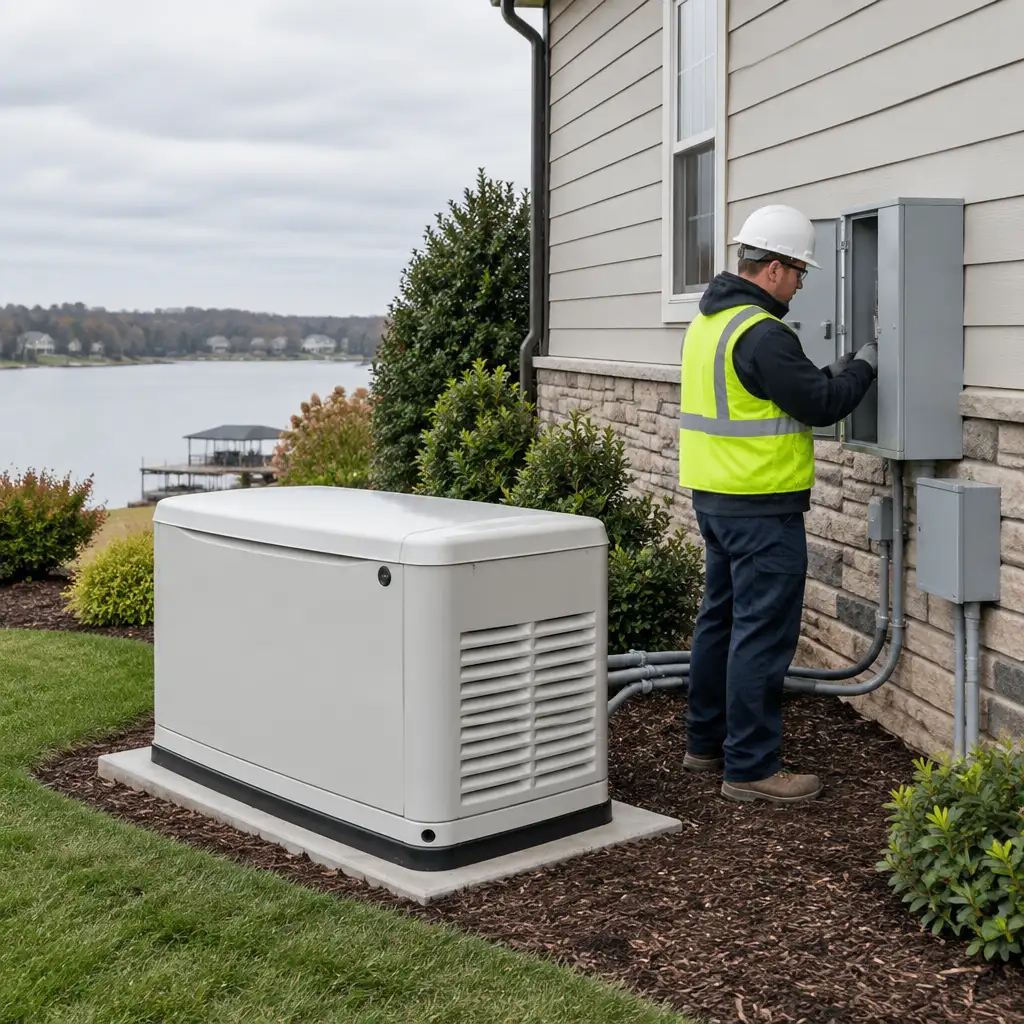
Power outages on the Lake Norman shoreline and in Cornelius, NC are inconvenient at best and disruptive at worst—especially for homeowners who rely on electric vehicles. A common question we hear is whether an EV can be charged safely during a power outage and what it takes to make that happen. This article explains the practical considerations for EV charger installation Lake Norman NC homeowners should weigh when planning backup power.
We’ll look at how residential generators supply backup power, what transfer switches do, generator sizing implications, and important safety and code considerations. The goal is to help Lake Norman homeowners make informed decisions without encouraging DIY electrical work. For most homeowners this planning will involve coordination with a licensed electrician to ensure safe, code-compliant installation.
ElecTek is a licensed, insured, and bonded electrical contractor serving Cornelius, NC and the Greater Lake Norman community. We provide EV charger installation, generator wiring, transfer switch installation, and related residential electrical services to support safe backup power plans. If you’re considering backup power for EV charging, learning the basics below will help you ask the right questions when you discuss EV charger installation with a professional.
Key takeaways: not all generators can charge an EV, transfer switches and professional wiring are essential, and safety plus National Electrical Code compliance should guide every decision. Read on for detailed guidance tailored to Lake Norman homeowners.
- Introduction
- How backup generators work with home EV chargers
- Generator sizing and capacity: can your generator handle EV charging?
- Transfer switches and interlocks: safe connections for backup power
- Types of EV chargers and expected charging rates during outages
- Safety, permits, and code considerations for Lake Norman homes
- Practical backup power planning for Lake Norman homeowners
- Frequently Asked Questions
How backup generators work with home EV chargers
Residential standby generators produce electricity when utility power fails and can power selected home circuits or, if sized appropriately, most of the house. Generators range from small portable units to whole-home automatic standby systems. For homeowners on Lake Norman, whole-home standby generators are popular because storms and outages can affect waterfront and inland properties alike.
To use a generator for EV charging, the generator must supply the circuit the charger uses. That sounds simple, but there are practical limits: generators have rated capacity in kilowatts (kW) and deliver a finite amount of power. A typical Level 2 charger running at 32 amps on a 240V dedicated circuit uses roughly 7.7 kW—so the generator, transfer equipment, and household load all need to be considered together.
Another consideration is generator type. Portable generators can power a charger using an appropriate inverter and transfer method, but they are often not intended for long-term vehicle charging and can overload easily. Automatic standby generators paired with a professionally installed transfer switch provide a safer, code-compliant solution for homeowners who expect to use backup power frequently.
Generator sizing and capacity: can your generator handle EV charging?
Generator sizing is the key question. A generator must be large enough to handle the EV charger plus the essential household circuits you want to keep running during an outage. If you try to run an EV charger plus air conditioning, well pump, water heater, and kitchen appliances on a generator that’s too small, you’ll trip overload protection or damage the generator.
When discussing sizing with a licensed electrician, expect a review of your electrical panel, existing loads, and EV charging goals. Many homeowners choose to prioritize essential circuits (refrigeration, refrigeration, lighting, communication, sump pump) and either schedule EV charging during low-demand windows or opt for a larger generator that supports both essential loads and EV charging simultaneously.
For Lake Norman homes with docks, boat lifts, or additional waterfront loads, include those in your load calculation. ElecTek can perform a home electrical assessment and help you estimate the generator kW rating needed to support the circuits you care about while keeping National Electrical Code requirements in mind.
Transfer switches and interlocks: safe connections for backup power
A transfer switch is a required safety device when connecting a generator to your home electrical system. It prevents backfeeding—where generator power feeds into utility lines—which is dangerous for utility workers and can damage equipment. Transfer switches come in manual and automatic varieties; an automatic transfer switch (ATS) engages the generator and transfers selected loads within seconds of an outage.
For EV charging there are two common approaches: wiring the EV charger to an essential-circuits panel that the transfer switch controls, or installing a dedicated transfer solution for the charger circuit. Both approaches require a licensed electrician to ensure the circuit is isolated properly and that the transfer device matches the generator and panel configuration. Interlock kits are another option on smaller setups, but these must be installed correctly and meet local code.
In the Lake Norman area, local inspection authorities and utility companies may have additional requirements. ElecTek recommends coordinating generator and transfer switch selection with a professional so your EV charger circuit is included in the backup plan safely and legally.
Types of EV chargers and expected charging rates during outages
EV chargers fall into two common residential categories: Level 1 and Level 2. Level 1 chargers plug into a standard 120V outlet and deliver slower, overnight charging. Level 2 chargers use a 240V dedicated circuit and charge much faster. The rate at which you can charge during an outage depends on the charger type, circuit rating, and available generator capacity.
If your backup generator is small, you might be limited to Level 1-style charging rates or reduced power to the Level 2 charger. Some modern chargers and vehicles support adjustable charging current—this allows a professional electrician to configure the charger to draw less power during generator operation, which can be a practical compromise for extended outages.
When planning an EV charger installation Lake Norman NC homeowners should consider whether they want to prioritize fast charging during outages or accept slower charging in exchange for a smaller generator. A licensed electrician can help you compare options and determine how charging speed will change when the home is on generator power.
Safety, permits, and code considerations for Lake Norman homes
Safety is paramount when combining EV charging and backup power. All permanent EV charger installations must be on a dedicated circuit with proper overcurrent protection and GFCI/AFCI devices where required. Transfer switch installations also require permits and inspections to confirm they meet National Electrical Code (NEC) and local jurisdiction rules.
Attempting to jury-rig connections between a generator and an EV charger or panel can create shock, fire, and backfeed hazards. Homeowners should not attempt to modify panel wiring or install transfer equipment without a licensed electrician. ElecTek is licensed, insured, and bonded, and we handle permitting, installations, and inspections for Cornelius and Lake Norman homeowners to ensure compliance and safety.
Insurance and warranty considerations may also apply—manufacturers sometimes require professional installation for warranty coverage, and insurers may expect code-compliant work after storm-related claims. Keeping your installation documented and permitted protects your family and property in the long term.
Practical backup power planning for Lake Norman homeowners
Start with a home electrical assessment that reviews your panel capacity, the charger circuit, and the likely loads to keep on during an outage. For many Lake Norman homeowners that includes refrigeration, lighting, well pumps, and communication devices. Decide whether EV charging during outages is a must-have or a convenience that can wait until utility power returns.
If EV charging during outages is important, consider these practical strategies: schedule charging during low-demand times, invest in a larger standby generator, configure the charger for reduced current while on generator power, or designate the charger to a selectively backed-up load center. Each option has cost and complexity tradeoffs that a licensed electrician should review on-site.
ElecTek works with homeowners, builders, and architects in the Greater Lake Norman area to plan installations that balance daily charging needs and backup capabilities. If you’re ready to evaluate options, you can book an appointment to discuss generator wiring, transfer switches, and EV charger integration with our team.
Frequently Asked Questions
Q: Can any generator charge my EV during an outage?
A: Not necessarily. The generator must have sufficient capacity for the EV charger plus the other essential house loads you want to run. Small portable generators are often underpowered for sustained Level 2 charging. A professional load calculation by a licensed electrician will determine whether your generator can safely support EV charging.
Q: Do I need a transfer switch to charge my EV from a generator?
A: Yes. A transfer switch or an approved manual transfer method is required to prevent dangerous backfeeding into utility lines and to protect equipment. The transfer device must be installed by a qualified electrician and inspected to meet NEC and local requirements.
Q: How do I start planning EV charging and backup power for my Lake Norman home?
A: Begin with a site visit and electrical assessment to review your panel, charger circuit, and desired backup loads. Work with a licensed electrical contractor to evaluate generator sizing, transfer switch options, permitting, and safe charger integration. If you’re in Cornelius or the Greater Lake Norman area, contact ElecTek to discuss your project and request an estimate.
Planning an EV charger, generator, renovation, or electrical upgrade? ElecTek helps homeowners throughout Cornelius, NC and the Lake Norman area make safe, code-conscious electrical decisions. Call 704-506-4205 or email trish@electekinc.com to discuss your project.