
Introduction
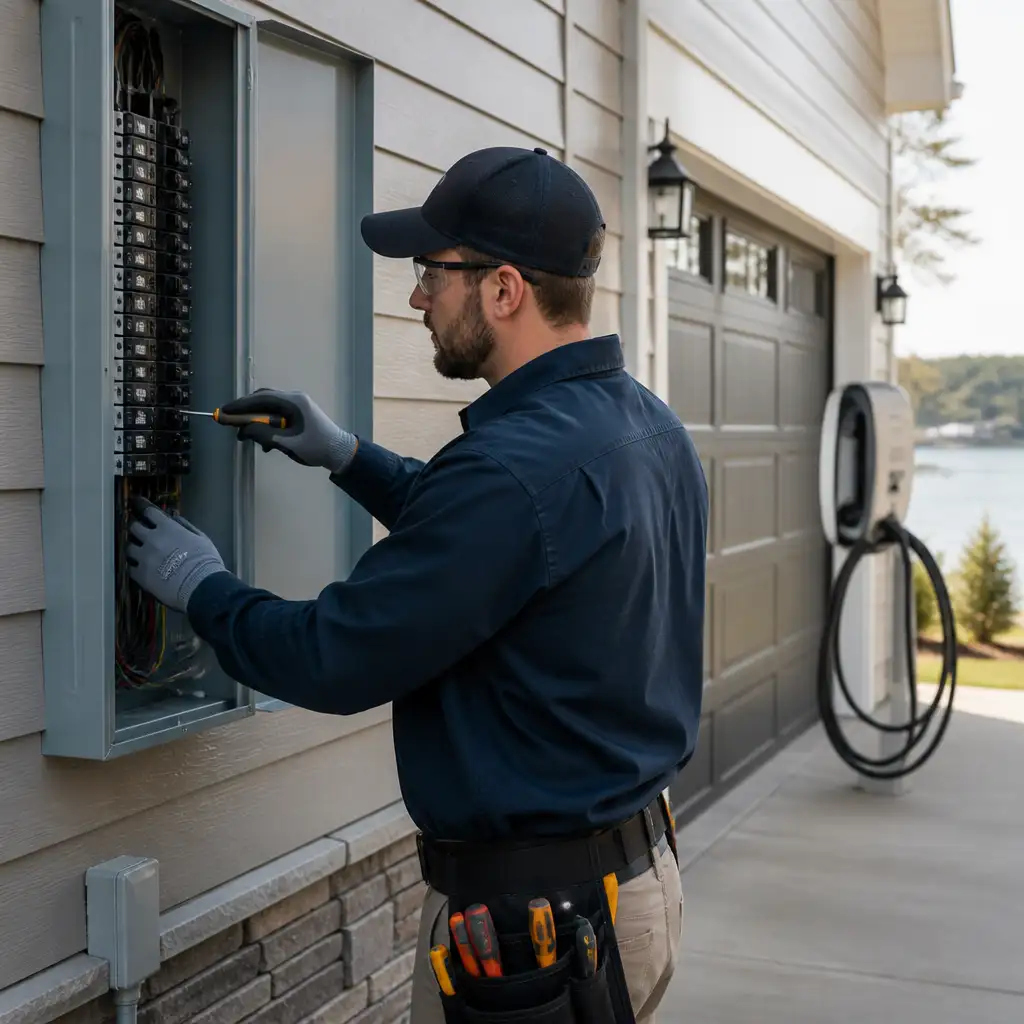
Adding a second EV charger at your Lake Norman or Cornelius home is an exciting step toward convenient electric vehicle ownership, but it brings important electrical questions. Homeowners often ask whether their existing electrical panel can handle another Level 2 charger, whether a dedicated circuit is required, and how permitting and the National Electrical Code (NEC) affect installation. This guide is written for Lake Norman, NC homeowners considering a second home charger and aims to clarify the choices and next steps.
Throughout this article we’ll use practical, homeowner-focused language to explain panel capacity, load calculations, and the difference between a full panel upgrade and smart load management. We’ll also cover charger placement considerations, dedicated circuit planning, permitting and NEC rules common in North Carolina, and realistic timelines and cost ranges for Cornelius and Lake Norman homes.
Safety and working with a licensed electrician are priorities. ElecTek, Inc. is a licensed, insured, and bonded residential electrical contractor serving Cornelius, NC and the Greater Lake Norman community. Our team follows NEC standards and local permitting practices to keep installations safe and code-compliant. If you’re considering EV charger installation Lake Norman NC, this guide will help you make informed decisions and prepare for a licensed electrician’s assessment.
Use the table of contents below to jump to the sections most relevant to your situation. If you want to discuss your home specifically, ElecTek provides EV charger installation and panel evaluations—see our electrical contracting services for more information.
- Introduction
- Assessing Your Current Panel Capacity
- Load Calculations: When to Upgrade vs Use Load Management
- Smart Load Management and Alternatives
- Dedicated Circuits and Charger Placement
- Permitting, Inspections, and NEC Considerations
- Timelines and Cost Estimates for Cornelius and Lake Norman Homes
- Frequently Asked Questions
Assessing Your Current Panel Capacity
The first step is a straightforward assessment of your existing service equipment. Many suburban homes around Lake Norman have 100A or 200A main services. A single Level 2 EV charger typically requires a 40A to 50A dedicated circuit, but two chargers running at similar power may exceed available capacity if the house already has heavy loads like electric ranges, HVAC, or a backup generator. A licensed electrician will check the main rating (e.g., 100A or 200A), the panel’s available spaces, the age and condition of breakers, and any manufacturer limitations.
During an on-site evaluation, the electrician will review your typical household load, recent electrical upgrades, and any future plans that could increase demand. This is an important time to mention planned renovations, hot tub installations, or a potential whole-house generator. ElecTek’s technicians perform these assessments as part of EV charger planning, ensuring recommendations are based on real measurements and NEC-informed practice.
For many Lake Norman homeowners, older 100A panels are the common limiting factor. If your home has a 200A service with spare capacity and a modern panel in good condition, adding a second charger may be possible with little more than a dedicated breaker and circuit wiring. However, apparent spare space in a panel does not automatically mean adequate service capacity — a load calculation and professional review are essential.
Load Calculations: When to Upgrade vs Use Load Management
Load calculations estimate how much power your home needs during peak usage. Electricians use a combination of NEC-derived rules and real-world experience to determine whether the service can handle a second charger without exceeding safe limits. If the calculation shows service demand is near or over capacity, you’ll need to choose between a panel/service upgrade or using load management strategies to avoid simultaneous high loads.
A panel or service upgrade typically involves replacing the main panel or increasing the service size (for example, from 100A to 200A) and coordinating with the utility for a larger meter or service drop. This is the most robust long-term solution and is recommended if you expect additional electrification projects. Upgrades have higher upfront cost but reduce the risk of nuisance tripping and provide headroom for future needs.
Alternatively, smart load management can allow two chargers to coexist on an existing service by ensuring they don’t draw full power at the same time. Whether load management is appropriate depends on your driving patterns, tolerance for slower charging, and the results of the load calculation. We’ll cover load management options in the next section.
For homeowners pursuing EV charger installation Lake Norman NC, a licensed electrician must perform load calculations and advise whether an upgrade or load-sharing solution best fits your budget and long-term plans.
Smart Load Management and Alternatives
Smart load management systems allow multiple EV chargers to share available capacity dynamically. These systems can prioritise one vehicle, restrict charging rates based on total household load, or schedule charging during off-peak hours. For many Lake Norman homes where a full service upgrade is costly or unnecessary, load management provides a practical compromise that keeps costs down while enabling two chargers.
Load management comes in hardware and software forms. Some chargers include built-in load-sharing features; third-party controllers can coordinate several chargers and integrate with home energy systems. When considering these solutions, homeowners should ask about compatibility between charger brands, how the system responds to other household loads, and whether the setup meets NEC requirements. A licensed electrician will ensure the chosen system is installed correctly and configured for safe operation.
Remember that load management reduces peak draw but may limit simultaneous fast charging. If you regularly need both vehicles charged quickly—such as multiple daily long drives—a panel upgrade may be the more practical long-term choice. ElecTek can help you weigh these trade-offs and recommend the appropriate equipment for your home.
Dedicated Circuits and Charger Placement
Level 2 chargers require a dedicated circuit sized appropriately for the charger’s continuous load. Placement decisions are both practical and safety-driven: choose a location that minimises cable runs, keeps the charger accessible in wet conditions, and avoids obstructing driveways. For Lake Norman waterfront properties, other considerations such as corrosion-resistant hardware and proximity to boat docks may influence placement decisions.
When planning placement, consider where vehicles park most frequently, how the cable will reach the inlet, and whether the route requires drilling through walls or running conduit outdoors. A shorter run typically reduces material and labour costs and simplifies installation. Your electrician will propose routing options that comply with NEC spacing and mounting guidelines while preserving your property’s appearance.
In addition to the charger location, plan the indoor equipment layout — the breaker, subpanels, or possible load-management devices must be accessible to the electrician and compliant with local inspection requirements. If you’re ready to schedule an on-site evaluation to plan circuits and placement, you can book an appointment with ElecTek’s team to review options for your Cornelius or Lake Norman home.
Permitting, Inspections, and NEC Considerations
Permits and inspections are standard for EV charger installations in North Carolina. Local jurisdictions around Lake Norman require electrical permits for new circuits and may require documentation showing compliance with the NEC. Your licensed electrician will submit permit applications, coordinate inspections, and ensure the installation meets code requirements — this is a critical service that protects safety and resale value.
Key NEC considerations include proper circuit sizing for continuous loads, appropriate overcurrent protection, correct grounding and bonding, and installation practices for outdoor equipment. Installations near water, such as docks or waterfront garages, require additional attention to corrosion-resistant materials and ground-fault protection per code. ElecTek follows NEC standards and local inspection rules as part of every EV charger project.
Utilities may also need to be notified if a service upgrade is required. In some cases, a utility inspection or meter upgrade is part of the permitting timeline. Your electrician will advise whether this applies to your property and coordinate with the utility as necessary. Always rely on a licensed, insured professional to manage permits and NEC compliance rather than attempting any electrical work yourself.
Timelines and Cost Estimates for Cornelius and Lake Norman Homes
Timelines and costs vary based on panel condition, distance from the panel to the charger location, permitting timelines, and whether a service upgrade is required. For many Cornelius and Lake Norman homes, a typical straightforward installation for a second charger on an existing 200A service with available capacity can take one to three days of on-site work, with permits and inspections adding several days to a couple of weeks depending on the town.
Cost ranges also vary. A basic additional dedicated circuit and charger install (assuming the service and panel are adequate) often falls in the lower-to-mid range for residential projects. If a panel or service upgrade is required, costs increase due to the panel replacement, coordination with the utility, and more extensive labour. Smart load management installations may offer cost savings compared to a full service upgrade but come with their own hardware and configuration expenses.
As an example, homeowners in the Lake Norman area commonly see: (1) a simple dedicated-circuit install with permit and inspection if the panel has capacity, (2) a load-management installation if simultaneous fast charging isn’t necessary, or (3) a panel/service upgrade if future electrification is planned. ElecTek can provide a site-specific estimate — if you want an accurate quote and timeline, please contact our team to request an estimate or to discuss your project.
Frequently Asked Questions
Q: How do I know if my panel can handle a second Level 2 charger?
A: A licensed electrician performs a load calculation and inspects your service equipment to determine capacity. Panel label ratings, current household loads, and planned future loads all factor into the decision. ElecTek’s assessments are practical and code-aware and will identify whether a dedicated circuit, load management, or service upgrade is the best path.
Q: Can two chargers share a single circuit?
A: No. Each Level 2 charger requires its own dedicated circuit sized for continuous load per NEC requirements. However, chargers can be configured with a load-sharing system so they don’t operate at full capacity simultaneously, which can allow multiple chargers on the same service without separate upgrades.
Q: How long does permitting take in Cornelius or Lake Norman?
A: Permit timelines vary by jurisdiction. Simple installations often see permit approval within a few days to two weeks; service upgrades that require utility coordination may take longer. Your licensed electrician will submit the necessary paperwork and help navigate local inspection schedules.
Planning an EV charger, generator, renovation, or electrical upgrade? ElecTek helps homeowners throughout Cornelius, NC and the Lake Norman area make safe, code-conscious electrical decisions. Call 704-506-4205 or email trish@electekinc.com to discuss your project.