
Introduction
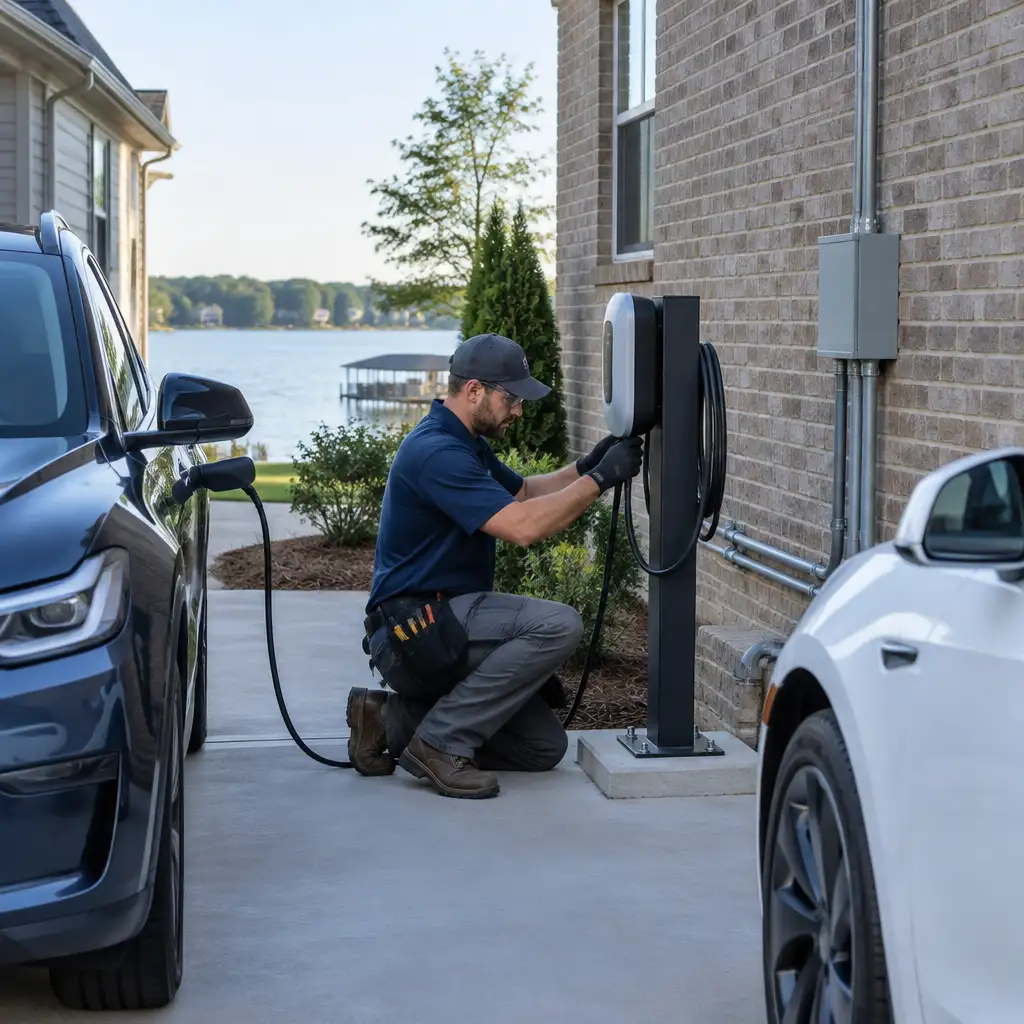
Homeowners around Lake Norman are increasingly looking to share EV charging resources when driveways serve two or more households. Whether you live in a duplex, a shared driveway arrangement, or an informal neighbor parking agreement, planning matters. This guide focuses on practical steps for EV charger installation Lake Norman NC homeowners should consider, including permissions, electrical capacity, load-sharing strategies, and permits.
Sharing a charger can be convenient and cost-effective, but it raises questions about who pays for the power, how to keep installations safe and code-compliant, and what paperwork your local jurisdiction and homeowners association (HOA) might require. ElecTek approaches these projects from a residential, safety-first perspective—and we recommend working with a licensed electrician for planning and installation.
This article explains how to secure neighbor agreements, assess panel capacity and circuit needs, choose metering or billing solutions, and navigate permits and inspections in Cornelius, NC and the Greater Lake Norman area. It also outlines typical technical solutions and when to call ElecTek for a site visit, load study, or installation.
Key takeaways: get written permission from any property owners involved, check panel and service capacity early, consider metering or smart billing for shared use, and engage a licensed electrical contractor to ensure NEC compliance and safe installation.
- Introduction
- Understanding permissions and neighbor agreements
- Assessing electrical capacity and panel planning
- Load-sharing, metering, and billing options
- Circuit planning, placement, and charger selection
- Permits, inspections, and NEC considerations in North Carolina
- Real-world solutions and when to engage ElecTek
- Frequently Asked Questions
Understanding permissions and neighbor agreements
Shared driveway charging typically involves more than one party: the property owner where the charger is mounted, one or more vehicles owned by neighbors, and sometimes an HOA or community covenants. Before any electrical work begins, get clear, written permission from the property owner who will host the charger and a simple agreement with neighbors who will use it. A written agreement reduces future disputes about access, costs, and maintenance.
HOAs or local covenants may have rules about exterior electrical equipment, conduit runs, or visible installations. Consult the HOA documents early and, if necessary, present a simple plan that shows charger placement and any conduit or surface-mounted raceways. For project planning and to avoid surprises, ElecTek often reviews HOA requirements with homeowners as part of pre-installation site visits.
When multiple households share a single charger, clarify expectations: who controls charging schedules, who pays for electricity, whether the host property owner expects reimbursement, and how to handle repairs or upgrades. Written agreements can be as simple as a signed lease addendum or as formal as a shared-cost contract; legal advice can help for more complex arrangements.
For homeowners looking for professional support, ElecTek’s residential electrical services page explains typical EV charger projects and how we work with owners and HOAs during planning: electrical contracting services.
Assessing electrical capacity and panel planning
Before choosing a charger, evaluate the electrical service feeding the home. Many older Lake Norman homes have 100-amp service or panels that are near capacity; adding an EV charger may require a panel upgrade or service increase. A licensed electrician will review the main service rating, existing loads, and whether a dedicated circuit is available for the charger.
Load calculations help determine if a 40A or 60A circuit is appropriate, or if a whole-house service upgrade is needed. In tight electrical situations, options include installing a lower-power Level 1 or Level 2 charger, staged charging schedules, or performing a targeted panel upgrade. ElecTek emphasizes NEC-compliant solutions and can advise whether a 200-amp service, subpanel, or dedicated circuit is the best path for your home in Cornelius, NC or elsewhere on Lake Norman.
When multiple households use a single electrical supply, assessing diversity and peak demand is critical. If two homes share a driveway but each home has its own meter and service, it’s often cleaner to install a charger on the charging vehicle owner’s meter. If the charger must be on the host owner’s panel, clear billing arrangements and electrical protections should be put in place.
Scheduling a home visit for an electrical inspection and load assessment is a practical next step. You can book an appointment with ElecTek to evaluate panel capacity and discuss upgrade options before making a final decision.
Load-sharing, metering, and billing options
When neighbors share a charger, deciding who pays for energy requires a fair, transparent method. There are several common approaches: have each user pay the host at an agreed rate, install an energy submeter that tracks usage per user, or use smart chargers with user-level billing features that allocate cost based on sessions. Each option has trade-offs in cost, complexity, and enforceability.
Smart charging stations can authenticate users with cards, apps, or RFID and record session energy consumption. Some models integrate with cloud billing systems so users can be invoiced automatically. For driveways that serve multiple households, a smart, networked charger often simplifies billing and reduces friction between neighbors. ElecTek can help size the circuit and install the charger with the required communication wiring or conduit.
Submetering is another route when the host wants precise billing without relying on a cloud service. A licensed electrician can install a submeter on the dedicated EV circuit; meters range from simple kWh meters to more advanced interval meters. Remember that some jurisdictions require permits and inspections for metering equipment, and the homeowner should check local rules in Cornelius and surrounding Lake Norman jurisdictions.
In shared situations that cross property lines, consult an attorney or title documents to ensure metering or billing arrangements comply with local ordinances and property agreements. ElecTek can coordinate with property owners, builders, or architects when a project requires design-level planning: see our builders and architects services for collaborative projects.
Circuit planning, placement, and charger selection
Charger placement affects convenience, safety, and installation cost. In multi-household driveways, aim for a location that minimizes long conduit runs and tripping hazards while keeping the charger accessible to all intended users. Wall-mount chargers on the host home’s exterior or a small pedestal-mounted unit in a shared spot are common solutions.
Circuit planning should include a dedicated breaker sized for the charger’s maximum continuous load, proper overcurrent protection, conduit or raceway sized for the conductors, and GFCI/AFCI protection where required by code. For outdoor installations, weatherproof enclosures and appropriate conduit fittings are essential. ElecTek’s technicians follow NEC standards to select wire sizes and protective devices that match the charger and the site’s conditions.
Choosing the charger depends on user needs. A Level 2 charger (240V) provides faster charging than Level 1 and is the typical choice for homes. If you expect multiple simultaneous users, consider a charger with built-in load management or a power-sharing EVSE system that can balance current among ports. Remember that any advanced equipment should be installed by a licensed contractor to maintain warranty coverage and code compliance.
If your project also involves larger electrical work—panel upgrades, new conduit, or integration with home automation—ElecTek provides full-service residential electrical work to coordinate those elements and keep the project on schedule and up to code.
Permits, inspections, and NEC considerations in North Carolina
Permits and inspections are a required part of safe, code-compliant EV charger installation in Cornelius, NC and the Lake Norman area. Local jurisdictions typically require a permit for any new 240V circuit, panel changes, or installed outdoor electrical equipment. Inspections ensure wiring, grounding, and overcurrent protection meet the National Electrical Code and local amendments.
Specific NEC requirements that often apply to home EV charging include continuous-load sizing rules, proper breaker and conductor sizing, and GFCI/AFCI protection where applicable. Grounding and bonding for outdoor equipment are also important, especially for installations near waterfront properties on Lake Norman where corrosion-resistant materials and weatherproofing matter.
ElecTek assists homeowners with permitting and inspection coordination. We prepare the electrical drawings, specify equipment, and schedule inspections to reduce delays. Because local jurisdictions can have small but important differences in enforcement, working with a licensed, local electrician helps avoid rework and ensures the installation satisfies both code and the inspector’s expectations.
Hiring a licensed contractor also protects homeowners: ElecTek is licensed, insured, and bonded, and carries North Carolina electrical license 27358 (and South Carolina license 2805) for projects that cross state lines. Our approach emphasizes safety, NEC compliance, and clear communication with homeowners and inspectors.
Real-world solutions and when to engage ElecTek
Typical shared-driveway solutions we’ve implemented around Lake Norman include: installing a wall-mounted Level 2 charger on the host home with a user agreement and smart billing app; adding a pedestal-mounted dual-port charger with integrated load management; and upgrading a host panel to add a dedicated EV subpanel and submeter for fair billing. Each job starts with a site visit, load assessment, and clear scope aligned with homeowner and HOA requirements.
Engage ElecTek early in the project if you need a panel assessment, service upgrade, or HOA coordination. Early involvement reduces surprises—like discovering the main service is undersized—or the need to relocate a charger because of access. We work with homeowners, builders, and architects to create practical, code-aware plans that fit lake-area properties and shoreline conditions when relevant.
Common signs it’s time to call a licensed electrician: you’re unsure about panel capacity, you plan to add more than one high-load device, you need help drafting a wiring plan for HOA review, or you want a certified submeter installation. ElecTek offers prompt, professional residential electrical service across Cornelius and the Greater Lake Norman community; to discuss your shared charging scenario and get a project estimate, please contact our team.
Working with a licensed contractor also helps homeowners document work for resale, insurance, and warranty purposes—important considerations in the Lake Norman housing market where buyers and sellers expect properly permitted electrical updates.
Frequently Asked Questions
Q: Can I legally install a shared EV charger on a driveway that serves multiple homes?
A: Often yes, but you should get written permission from the property owner, check HOA rules, and confirm local permit requirements. If the charger is on the host home’s meter, you’ll also want a billing or metering solution to track who pays for energy.
Q: What electrical upgrades are commonly needed for shared Level 2 charging?
A: Common upgrades include installing a dedicated 40A–60A circuit, adding a subpanel, or upgrading the main service to 200 amps if the existing service is near capacity. A licensed electrician can perform load calculations and recommend a safe, NEC-compliant solution.
Q: When should I hire ElecTek for a shared driveway EV charging project?
A: Contact ElecTek when you need a professional site assessment, load study, permit-ready plans, or full installation. We handle panel upgrades, circuit installation, charger mounting, metering options, and coordinate with HOAs or builders when necessary.
Planning an EV charger, generator, renovation, or electrical upgrade? ElecTek helps homeowners throughout Cornelius, NC and the Lake Norman area make safe, code-conscious electrical decisions. Call 704-506-4205 or email trish@electekinc.com to discuss your project.