
Introduction
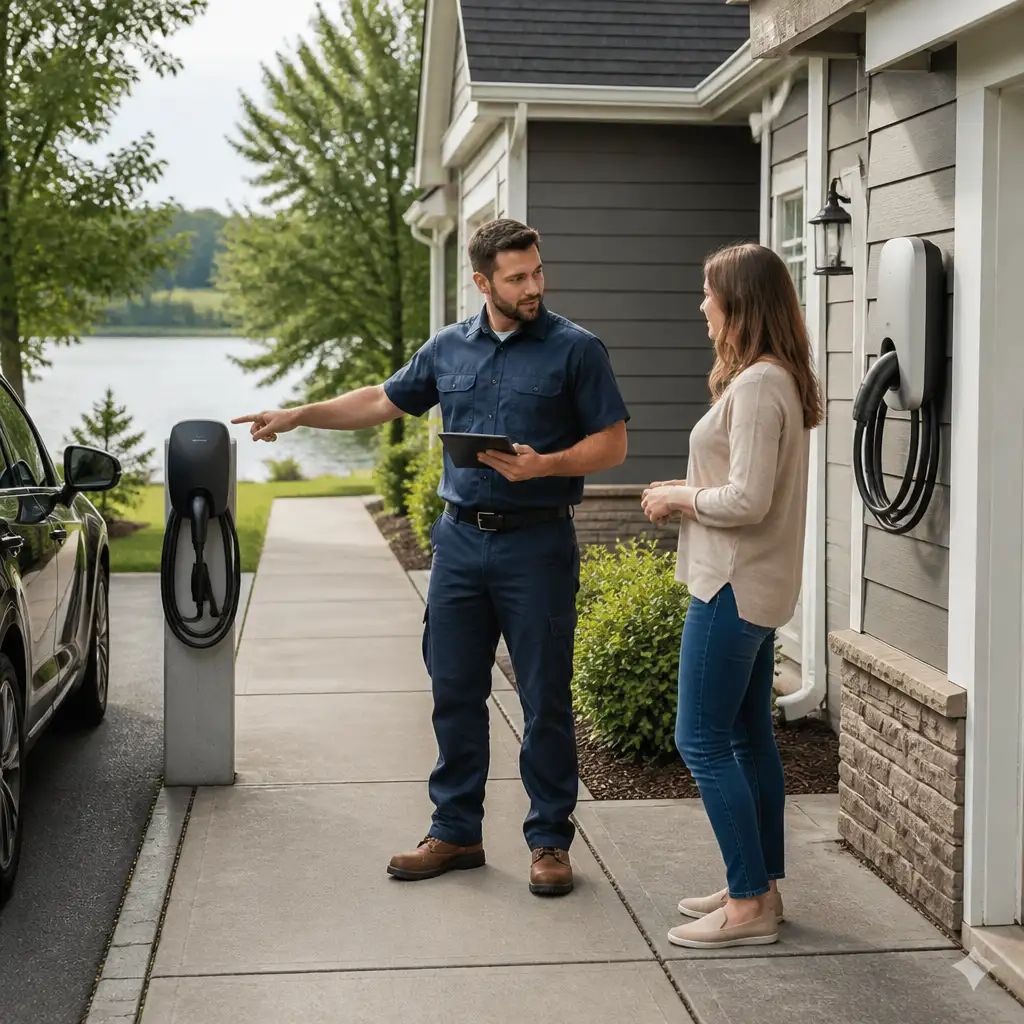
Owning an electric vehicle in Cornelius, NC or elsewhere on Lake Norman brings convenience and efficiency, but limited driveway space or curbside parking can make installing a home charger feel complicated. This article walks homeowners through realistic planning for EV charger installation Cornelius NC residents commonly face—tight driveways, shared parking, and street parking scenarios.
We’ll cover the practical decisions that affect where a charger can go: conduit routing, trenching options, meter and panel locations, easements and shared-driveway rules, and safe mounting solutions for low-clearance settings. The goal is to help homeowners understand site constraints, code and permitting considerations, and when it’s time to call a licensed electrician.
Throughout this guide we reference local considerations for Cornelius and the Greater Lake Norman area and explain why licensed, code-conscious work matters for safety and reliable charging. If you’re planning an installation, this will help you ask the right questions during estimates and municipal permitting.
Key takeaways include what to check on your property before a site visit, realistic routing options when direct panel access is limited, and steps for coordinating permits and utilities. You’ll also find guidance on when to involve a professional to avoid costly rework or noncompliant installations.
- Introduction
- Assessing parking constraints and charger needs
- Conduit routing and trenching options for tight spaces
- Meter location, panel capacity, and dedicated circuit planning
- Easements, shared driveways, and curbside parking legalities
- Safe charger mounting and low-clearance mounting solutions
- Permits, utility coordination, and when to call a licensed electrician
- Frequently Asked Questions
Assessing parking constraints and charger needs
Start with a realistic assessment of how and where you park. Note whether vehicles are parked in a tight single-car driveway, a shared driveway with a neighbor, on-street at the curb, or in a detached garage. Take photos showing the distance from the parking space to the home’s main electrical meter and panel—these images are useful during initial conversations with an electrician or permitting office.
Decide whether you need Level 2 charging (240V) for faster daily charging or whether occasional Level 1 charging (120V) will suffice. Most homeowners installing a dedicated home charger choose Level 2, which requires a dedicated circuit and often panel capacity upgrades. Your daily mileage and vehicle battery size should guide the decision.
Consider typical parking positions: curbside cars may extend farther from the house than driveway vehicles, and shared driveways mean you’ll need clear agreements about equipment placement. If your parking spot varies—street parking some nights, driveway other nights—plan for the most restrictive scenario so the charger can be used reliably.
Conduit routing and trenching options for tight spaces
When direct access from the panel to the parking spot is limited, routing options become central to a viable installation. Conduits can run along exterior walls, under driveways, or through landscaped areas. In many Cornelius homes, the shortest path may cross a walkway or driveway and require trenching and conduit installation to meet code and protect wiring.
Open trenching across a driveway is a common solution where the panel is on the house side opposite the parking space. Trenching depth and conduit type must meet National Electrical Code (NEC) requirements and local permitting conditions. A licensed electrician will size conduit and choose burial depth and conduit schedule appropriate for North Carolina standards and local inspection requirements.
In constrained or historic properties where trenching isn’t desirable, conduit can sometimes be routed along house exteriors or through a crawlspace. These options may increase conduit length and cost, but they avoid disrupting landscaping or hardscapes. For curbside or detached parking, longer conduit runs to a remote mounted service disconnect or subpanel may be the safest practical approach.
Meter location, panel capacity, and dedicated circuit planning
One of the most important practical checks is panel capacity. Many older Lake Norman-area homes were built with limited spare breaker spaces or panels rated below the level needed for a 40–50 amp EV charger. Confirm whether your panel has room for a new double-pole breaker or whether you’ll need a subpanel or service upgrade.
The location of the electric meter and service entrance affects how you route conduit and whether you can mount the charger on the wall near the panel. Meter-mounted disconnects or panels on front facades can make installations simpler, while meters located on the opposite side of the house may require trenching or a remote subpanel closer to the parking area.
During planning, an electrician will perform a load calculation to determine whether a dedicated circuit is feasible without overloading the service. If the existing service is near capacity, options include installing a subpanel, upgrading the service, or installing a charger with built-in power management. Discuss these options with a licensed electrical contractor to select the safest and most cost-effective route.
Easements, shared driveways, and curbside parking legalities
Shared driveways and properties with recorded easements can complicate charger placement. Before installing equipment on property you don’t exclusively control, review your deed and any HOA rules that apply. Shared-driveway agreements may require neighbor consent for physical changes, and public right-of-way rules often limit what can be installed in the curb area.
If you’re considering mounting a charger on a pole near the curb or installing conduit across a shared strip of land, get written permission from co-owners or consult with your HOA. For curbside installations that cross the public right-of-way, utility coordination with the town or county may be required. ElecTek recommends addressing easement questions early to avoid removed or relocated equipment after installation.
When in doubt, a site visit by a licensed electrician can identify potential legal or practical barriers and suggest alternatives—like a driveway-mounted pedestal or a subpanel placed on your side of a shared driveway. Documenting agreements and permits reduces the risk of disputes later.
Safe charger mounting and low-clearance mounting solutions
Mounting the charger safely is about stability, weather protection, and accessibility. Wall-mounted units are common when a garage or exterior wall sits adjacent to the parking spot. For tight driveways, consider a compact wall mount placed at an angle so the cable reaches the vehicle without creating a trip hazard.
When no suitable wall is available, pedestal or post-mounted chargers are a practical alternative. These secure, weatherproof posts can be installed in lawns, mulched strips, or the edge of driveways and placed within reach of a parked vehicle. Proper foundation, anchoring, and clearances are important; pedestal bases require concrete footings set below frost lines and anchored per manufacturer and local code.
In curbside or shared-parking situations, low-clearance mounting brackets and flexible cable management options help keep cords off sidewalks and streets. Use cable holsters or retractors and place the charger or pedestal to minimize pedestrian obstruction. A licensed installer can recommend mounting choices that meet NEC clearances and local inspection expectations.
Permits, utility coordination, and when to call a licensed electrician
Permits are typically required for new 240V circuits, conduit runs, and any trenching that affects public or easement areas. The Town of Cornelius and Mecklenburg County have inspection rules that ensure installations meet NEC and local code requirements. Your electrician should pull the permit, schedule inspections, and provide documentation for both safety and future property transfers.
Utility coordination is also important when installations require work near the meter, service lateral, or in the right-of-way. In some cases, the utility must disconnect service temporarily, inspect the work, or approve meter-side changes. Coordination prevents delays and helps identify necessary service upgrades early in the project.
Call a licensed electrician when you need: a load calculation, panel or service upgrade, trenching that crosses public or shared property, or for advice about easements and permits. ElecTek is a licensed, insured, and bonded residential electrical contractor serving Cornelius and the Greater Lake Norman community; our team follows NEC standards and local permitting practices to ensure safe, compliant installations. For homeowners ready to move forward, you can learn more about EV charger installation on our services page or book an appointment to schedule a site visit.
Frequently Asked Questions
Q: How close does the charger need to be to my electrical panel?
A: Ideally the charger should be placed to minimize conduit length and avoid unnecessary trenching, but there is no single required distance. Placement depends on where your panel or meter is located, whether trenching is feasible, and local code clearances. A licensed electrician will evaluate panel capacity and routing options during a site visit.
Q: Can I install an EV charger if I park on the street or have a shared driveway?
A: Yes, but you may need written permission from neighbors or the HOA for shared driveways, and curbside installations may require town approval or utility coordination. Pedestal mounts, longer conduit runs, or a subpanel closer to your parking spot are common solutions.
Q: When should I expect to need a panel or service upgrade for a Level 2 charger?
A: If your panel has limited spare breaker space, or your service is already near capacity, a subpanel or service upgrade may be necessary. A licensed electrician will perform a load calculation and recommend whether a dedicated circuit, subpanel, or service upgrade is the safest option for reliable charging.
Planning an EV charger, generator, renovation, or electrical upgrade? ElecTek helps homeowners throughout Cornelius, NC and the Lake Norman area make safe, code-conscious electrical decisions. Call 704-506-4205 or email trish@electekinc.com to discuss your project.