
Introduction
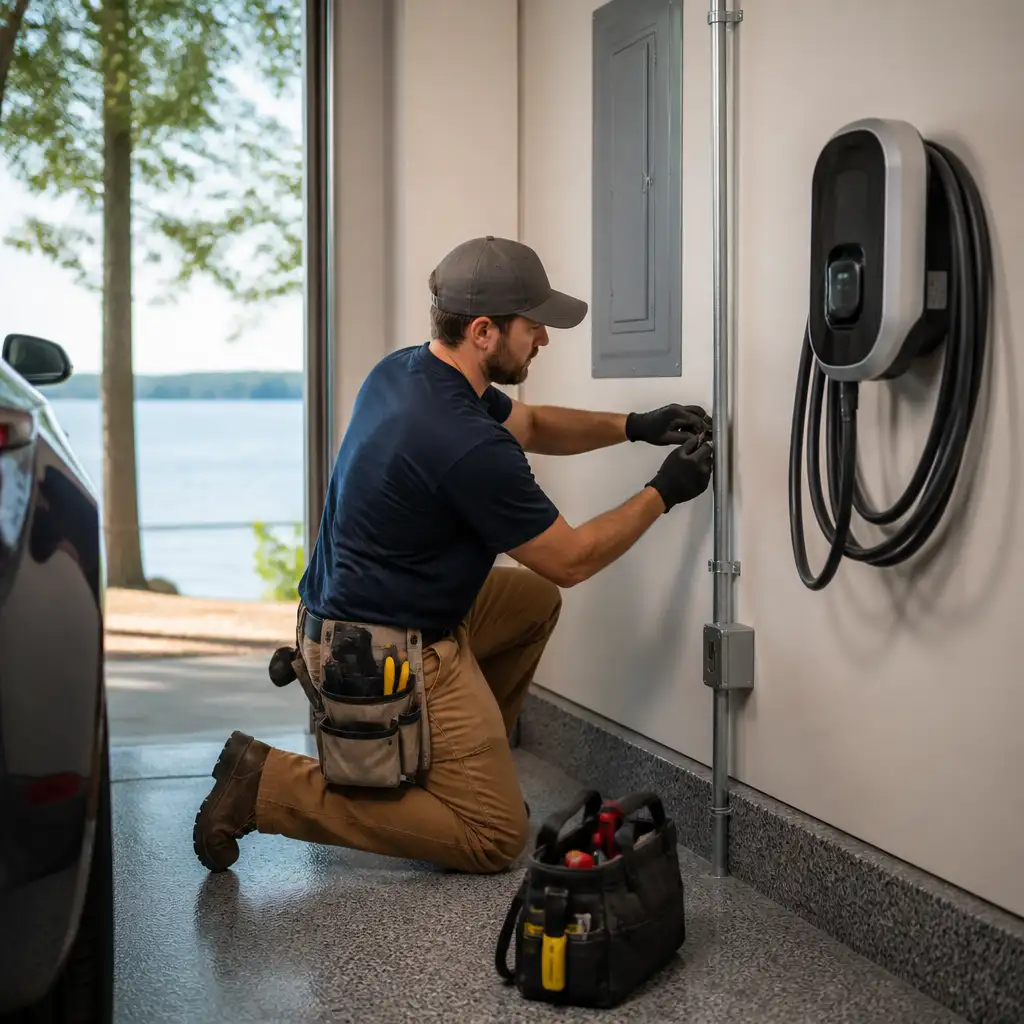
Adding an EV charger as part of a home renovation is a smart, future-ready decision for Lake Norman homeowners. Whether you live in Cornelius, NC or elsewhere around Greater Lake Norman, planning EV charger installation during a remodel can save time, money, and disruption compared with a retrofitted installation after construction is finished. This article explains what to expect for EV charger installation Lake Norman NC during a renovation: timing, permitting, conduit and wiring rough-in, and how to coordinate with builders and electricians.
Homeowners and small business owners undertaking a remodel should involve their electrical contractor early. That early coordination ensures the project meets National Electrical Code (NEC) requirements, satisfies local permitting and utility needs, and leaves space for a dedicated circuit and charger location without surprises. ElecTek is a licensed, insured, and bonded electrical contractor serving Cornelius, NC and the Greater Lake Norman area, and we frequently work with remodel teams to integrate EV charging into electrical plans.
This guide is homeowner-focused: it explains practical steps, roles and responsibilities, typical timelines, and important safety and code considerations. It is not a how-to for DIY wiring. Electrical work should be performed by a licensed electrician, and local permitting and utility coordination are essential parts of a compliant installation.
Below you’ll find a short linked table of contents to jump to specific sections on permits, rough-in requirements, working with builders and architects, and frequently asked questions.
- Introduction
- Why plan EV charger installation during a remodel
- Permits and utility coordination in Lake Norman
- Electrical capacity, panel considerations, and rough‑in
- Conduit, wiring rough‑in and charger location considerations
- Working with builders and architects
- Timing, inspections, and the final charger installation
- Frequently Asked Questions
Why plan EV charger installation during a remodel
When you remodel, walls are open, floors may be accessible, and trade coordination is already scheduled. That makes it considerably easier to run conduit, position the electrical panel or subpanel, and route wiring to the ideal charger location. Planning at the design stage avoids cutting finished surfaces later and reduces labour costs tied to rework.
Practical benefits include the ability to design a dedicated circuit and panel capacity upfront, to select a charger location that suits how you park, and to coordinate with other electrical upgrades such as panel changes, whole-home automation, or lighting plans. For homeowners focused on efficiency, these early decisions help avoid surprises and extra permit cycles.
Early planning also clarifies the homeowners’ preferences—charger power level (for example, 40A or 60A), indoor versus outdoor mounting, and whether a future upgrade to faster charging is desired. Documenting these preferences during the remodel ensures the electrical rough-in supports them without expensive retrofits.
Permits and utility coordination in Lake Norman
Permitting is a critical step for EV charger installation Lake Norman NC. Most municipalities require a permit for a new dedicated circuit or panel modification, and inspectors will check for NEC compliance. In the Lake Norman area, permitting processes are handled by local jurisdictions, and timelines differ—so factor permit time into your renovation schedule.
Utility coordination may be necessary if your charger or panel upgrade changes the home’s service demand. If a service upgrade or meter work is required, the utility company will need notice and a schedule. Your licensed electrician can coordinate with the utility and submit required documentation. In many cases, the electrician secures the building permit and coordinates the inspection, then notifies the utility if a service change is required.
Working with a contractor familiar with local permitting, inspections, and utility processes saves time. ElecTek regularly helps homeowners through permitting and utility coordination for EV chargers and other electrical upgrades; see our electrical contracting services page for service details and related work we perform.
Electrical capacity, panel considerations, and rough‑in
One of the first things to evaluate is whether your electrical panel has space and capacity for a dedicated EV circuit. Modern Level 2 chargers commonly require a dedicated 40A to 60A circuit. If the existing panel is full or the main service rating is marginal, a panel upgrade or the addition of a subpanel may be needed to accommodate the charger and other remodel loads.
During a renovation, it’s practical to rough in wiring paths from the panel to the intended charger location. Running conduit and positioning a subpanel now prevents tearing into finished walls later. A licensed electrician will perform load calculations in line with the NEC and local code to determine if a service upgrade, panel change, or dedicated subpanel is necessary.
Panel upgrades and service changes require permits and coordination with the utility. If a homeowner is also planning other high-demand additions—such as a Generac standby generator installation or major kitchen appliances—discuss those with your electrician at the same time to produce a cohesive electrical plan.
Conduit, wiring rough‑in and charger location considerations
Choosing the charger location is both a practical and a planning decision. The ideal spot depends on where you park, whether the charger will be mounted on a garage wall or a post, and how the cable will be routed. During renovation, you can have conduit and a raceway roughed in to a future charger location so the final installation is quick and tidy.
Conduit and wiring rough-in should be sized for the anticipated charger amperage and potential future upgrades. If you plan to upgrade to a higher-capacity charger later, consider installing larger conduit now to avoid additional chiselling or drilling later. Your electrician will advise on appropriate conduit size and wire type consistent with NEC requirements.
Weather protection and mounting height are other practical items. Outdoor chargers need appropriate weatherproof enclosures and GFCI protection where required. A licensed electrician will specify the charger type and mounting to meet local code while keeping the installation neat and convenient for daily use.
Working with builders and architects
Remodel projects usually involve multiple trades and a design team. Bringing an electrician into conversations about the electrical plan early ensures conduit locations, panel placement, and cable runs are integrated into the construction drawings. ElecTek frequently partners with builders and architects on renovation projects to align electrical rough-in with framing, insulation, and finishing schedules.
As a homeowner, share your EV charging goals with your architect or builder during the planning phase so they can allocate wall space or garage layout adjustments. Architects can include the preferred charger location on plans, and builders can coordinate the rough-in with framing and drywall schedules to avoid delays.
Clear communication among homeowner, builder, and electrician reduces the chance of scope gaps. Ask your builder to include electrical rough-in milestones in the project timeline so the electrician can complete conduit and panel work before inspections and finishes occur.
Timing, inspections, and the final charger installation
Timing for an EV charger added during a remodel depends on permit lead times, panel availability, and the renovation schedule. Typical steps include initial site visit and load calculation, permit submission, rough-in during construction, electrical inspection of rough-in, and final hookup and commissioning when finishes are in place. Plan several weeks for permitting and schedule trades accordingly.
Inspections are required at multiple stages. Inspectors will review rough-in wiring, conduit routing, and panel work before drywall is installed. After the final wiring and charger mounting, a final inspection ensures the installation meets code and is safe for use. Your licensed electrician handles inspection scheduling and any corrections the inspector may request.
Once inspections are complete, the electrician completes the final charger installation and tests the system. They can also help with any app setup or connectivity the charger requires. If you prefer professional support to coordinate the whole process, you can book an appointment to discuss scheduling and scope.
Frequently Asked Questions
Q: How early in a renovation should I talk to an electrician about EV charger installation?
A: As early as possible—ideally during design and before framing. Early involvement lets the electrician plan conduit routes, panel capacity, and permit needs so the rough-in happens efficiently and without rework.
Q: Will I need a panel upgrade or service change to add a Level 2 charger in Lake Norman?
A: It depends on your existing panel and the charger amperage. Many homes can accommodate a Level 2 charger with a dedicated circuit, but some will need a subpanel or service upgrade. A licensed electrician will perform load calculations and recommend the right solution while ensuring NEC compliance.
Q: Who coordinates permits and utility notifications for EV charger installations during a remodel?
A: Typically the licensed electrical contractor handles permit applications, schedules inspections, and coordinates with the utility when service or meter changes are necessary. Hiring a contractor experienced with Cornelius and Lake Norman permitting processes simplifies this coordination—contact our team to discuss next steps.
Planning an EV charger, generator, renovation, or electrical upgrade? ElecTek helps homeowners throughout Cornelius, NC and the Lake Norman area make safe, code-conscious electrical decisions. Call 704-506-4205 or email trish@electekinc.com to discuss your project.