
Introduction
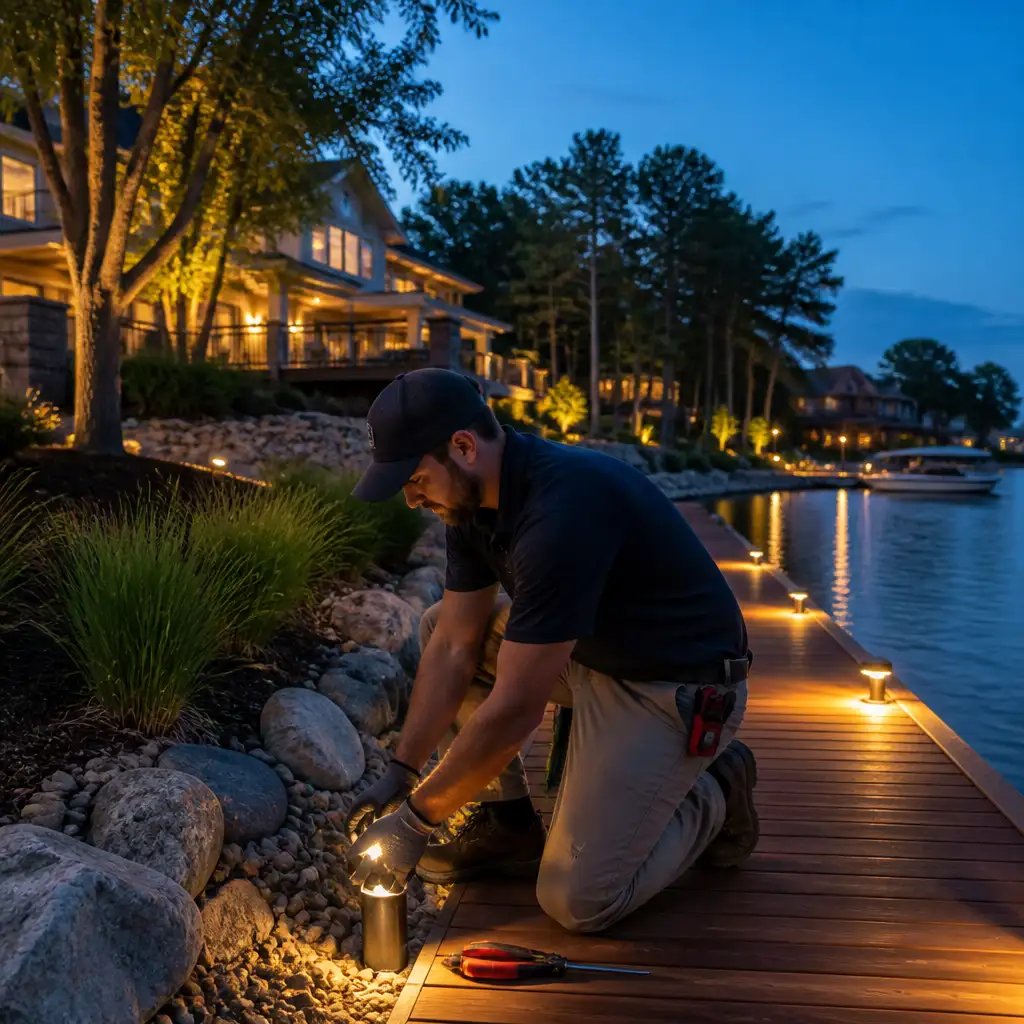
Waterfront homes on Lake Norman present wonderful opportunities for outdoor living, but exterior lighting requires careful planning. If you are searching for home lighting installation Lake Norman NC, this guide explains the practical issues Lake Norman homeowners should consider before installing dock and landscape lighting.
Good lighting improves safety, highlights landscaping and architecture, and extends the hours you can enjoy your dock and shoreline. At the same time, waterfront lighting has unique electrical and weather-exposure considerations that make planning essential. This article covers fixture selection, wet-location wiring, lighting design for safety and aesthetics, and coordination with dock wiring and boat lifts.
Throughout this guide we stress code-conscious, safety-first approaches and recommend working with a licensed electrical contractor. ElecTek is a licensed, insured, and bonded local company located in Cornelius, NC with experience supporting homeowners and builders across the Greater Lake Norman community.
Key takeaways include choosing fixtures rated for wet locations, planning dedicated circuits for docks, integrating low-voltage landscape lighting where appropriate, and coordinating work with dock contractors and local permitting officials. For a full list of services we offer, see our electrical contracting services.
- Introduction
- Choosing Fixtures for Lake Norman Waterfront Homes
- Wet‑Location Wiring and Grounding Considerations
- Designing Lighting for Safety and Aesthetics
- Coordinating Dock Lighting with Dock and Boat Lift Wiring
- Permits, Codes, and Working with a Licensed Electrician
- Practical Planning Checklist and Budget Considerations
- Frequently Asked Questions
Choosing Fixtures for Lake Norman Waterfront Homes
Fixture selection is the first big decision for waterfront lighting. Choose fixtures specifically rated for exterior, wet locations—these products are sealed to keep moisture out and resist corrosion near lake environments. Popular options for Lake Norman homes include marine-grade LED dock lights, sealed post lights for piers, and low-voltage path lights for lawns and walkways.
LED fixtures are common because they offer energy efficiency, long life, and lower heat output. When comparing products consider lumen output (brightness), colour temperature (warm vs cool white), beam spread, and the IP or wet-location rating. Avoid indoor-rated or splash-only fixtures for any area that could be submerged or often exposed to spray from the lake.
Landscape fixtures also come in low-voltage and line-voltage options. Low-voltage systems (12V) are safer around water and are easier to relocate for landscape changes, but they require quality transformers and properly sized wiring. Line-voltage fixtures provide higher output but usually require heavier wiring and stricter protection. A licensed electrician can advise on the best choice for your property size and usage.
Wet‑Location Wiring and Grounding Considerations
Wiring practices for docks and shoreline lighting should prioritise safety and NEC compliance. Wet-location wiring requires conduit, corrosion-resistant hardware, and GFCI protection where mandated. All outdoor circuits within the dock and shore area should have ground-fault protection to reduce shock risk around wet surfaces.
Grounding and bonding are crucial for docks with metal components or boat lifts. Proper bonding keeps metalwork at a common potential and helps prevent stray voltage. An electrician experienced with boat lift and dock wiring understands the specific grounding and bonding requirements and can coordinate with your dock builder to ensure electrical systems are integrated safely.
Weather exposure also affects wiring selection. Use marine-grade cable, sealed junction boxes rated for immersion or submersion if applicable, and corrosion-resistant fasteners. Regular inspection and maintenance are important; salt-free Lake Norman still presents moisture and humidity challenges that can degrade connections over time.
Designing Lighting for Safety and Aesthetics
A thoughtful lighting plan balances safety—illuminating steps, ramps, and perimeter edges—with aesthetics that enhance waterfront views without causing glare or light pollution. Start by mapping high-use areas such as dock edges, stairs, walkways, boat lift platforms, and entertaining spaces, then allocate lighting zones with appropriate control options.
For safety, use low-level bollard or step lights on pathways and recessed or in-deck lights on docks to avoid tripping hazards. To minimise glare on the water and preserve neighbours’ enjoyment of the night sky, consider shielded fixtures and warmer colour temperatures (2700K–3000K). Motion sensors and timers add convenience and can reduce energy use, but place sensors carefully to avoid frequent false triggers from wildlife.
Integrating landscape lighting with dock lighting creates a cohesive look from shoreline to water. A layered approach—uplighting specimen trees, path illumination, and subtle dock accents—helps the eye move naturally across the property. ElecTek’s lighting design and installation services can help you choose fixtures and control systems that suit your home and local conditions.
Coordinating Dock Lighting with Dock and Boat Lift Wiring
Dock lighting seldom stands alone; it needs to work with dock wiring, boat lifts, and any shore-power receptacles. Coordinate electrical plans early with your dock contractor and any marine equipment installers so conduits, junction boxes, and wiring pathways are planned before final deck or dock construction.
Boat lifts and dock motors often require dedicated circuits and have specific voltage and control requirements. Running lighting and power for lifts on separate circuits prevents interference and allows for proper overload protection. When planning, confirm load estimates for motors, lighting, and any shore-side outlets so the main panel can accommodate the additional circuits.
Professional electricians experienced in boat lift and dock wiring—like ElecTek—can perform load calculations, specify the correct wire sizes, and install appropriate disconnects and GFCI protection. Early coordination reduces change orders, keeps the installation tidy, and ensures long-term reliability for waterfront systems.
Permits, Codes, and Working with a Licensed Electrician
Many lake-area electrical projects require permits and inspections. Local jurisdictions and the National Electrical Code (NEC) set rules for outdoor wiring, GFCI protection, and wet-location equipment. Working with a licensed electrician ensures your installation follows current codes and passes inspection, which protects your family and your property value.
ElecTek is a licensed, insured, and bonded electrical contractor serving Cornelius, NC and the Greater Lake Norman community. We can handle permitting and inspections on your behalf and coordinate with building officials and dock contractors. If you are working with builders or architects on a new home or renovation, our builders and architects team can support early electrical planning and layout decisions.
Hiring a licensed professional also reduces safety risk. Avoid DIY electrical work near water—incorrect installations can create dangerous shock hazards and risk failed inspections. A licensed electrician will document work, install required protection such as GFCIs, and provide guidance on maintenance and periodic inspection schedules.
Practical Planning Checklist and Budget Considerations
Start planning by listing priorities: safety lighting, path and dock illumination, accent and uplighting, and any power needs for lifts or shore outlets. Get quotes that separate fixture costs, wiring and conduit, transformer or panel upgrades, and labour. Waterfront projects often require tougher materials and additional labour for running conduit to the dock, so budget accordingly.
Consider these practical items in your project scope: fixture wet-location ratings, transformer capacity for low-voltage systems, dedicated circuits for lifts and dock power, GFCI protection, and surge/lighting protection for shore-side circuits. Also plan for future needs—adding conduits or spare capacity during initial installation is more cost-effective than retrofitting later.
When you are ready to move from planning to scheduling work, you can contact our team to discuss timelines, estimates, and permitting. ElecTek strives for prompt scheduling, clear communication, and professional workmanship on Lake Norman homes, and we’ll help you balance durability, aesthetics, and budget.
Frequently Asked Questions
Q: Do dock lights need special circuit protection?
A: Yes. Dock circuits typically require ground-fault protection and often need dedicated circuits for boat lifts and motors. A licensed electrician will ensure proper GFCI protection and circuit sizing to meet code and reduce shock risk around water.
Q: Can I use low-voltage lighting everywhere around a waterfront property?
A: Low-voltage lighting is ideal for many landscape and path applications because it’s safer near water and easier to relocate. However, some high-output needs or certain dock equipment may require line-voltage circuits. A licensed electrician can help determine the right mix for your property.
Q: How do I find an electrician familiar with dock wiring in the Lake Norman area?
A: Look for licensed contractors with local waterfront experience. ElecTek is a licensed, insured, and bonded company in Cornelius, NC that works throughout Lake Norman and offers dock and boat lift wiring, lighting design, and related residential electrical services. We recommend discussing experience, references, and permitting support when choosing a contractor.
Planning an EV charger, generator, renovation, or electrical upgrade? ElecTek helps homeowners throughout Cornelius, NC and the Lake Norman area make safe, code-conscious electrical decisions. Call 704-506-4205 or email trish@electekinc.com to discuss your project.