
Introduction
Frequent circuit breaker trips are one of the most common electrical annoyances for homeowners in Cornelius and the Greater Lake Norman area. While a single trip now and then is normal, repeated trips — especially when they happen without an obvious cause — can signal a more serious electrical issue. This article explains common causes, safe short-term steps, diagnostic priorities, and when you should call a licensed professional for residential electrical services Lake Norman NC.
Our goal is to help homeowners and small business owners recognise warning signs, take safe temporary actions, and understand what a qualified electrician will check. If you live near Lake Norman, waterfront properties and homes with pool equipment, EV chargers, or older panels have specific considerations that can influence breaker behaviour.
We emphasise safety and professional guidance rather than encouraging DIY repairs. If you need trusted local help, ElecTek is a licensed, insured, and bonded electrical contractor serving Cornelius, NC and the Lake Norman community; learn more about our work at ElecTek.
Read on to learn practical, non-technical guidance that helps you prioritise safety and schedule the right professional troubleshooting or repairs when breakers keep tripping.
- Introduction
- Common causes of frequent breaker trips in Lake Norman homes
- How to safely respond when a breaker trips
- Diagnostic priorities a licensed electrician will check
- When tripping is caused by appliances or equipment
- Timing and scheduling professional troubleshooting in Cornelius and Lake Norman
- Preventing future trips: panel upgrades and practical improvements for lake-area homes
- Frequently Asked Questions
Common causes of frequent breaker trips in Lake Norman homes
Understanding the typical reasons breakers trip helps you assess risk and decide how quickly to call for professional help. Common causes include overloaded circuits, short circuits, ground faults, faulty breakers, and aging panel components. In lake-area homes, moisture, corrosion around outdoor or dock wiring, and equipment like pool pumps and boat lifts can increase the chance of nuisance trips.
Overloads happen when too many devices draw power from the same circuit at once — for example, space heaters, kitchen appliances, and window air conditioners running on older branch circuits. Short circuits and ground faults are more serious: they occur when hot and neutral wires touch, or hot wires contact grounding paths, creating a sudden surge of current that the breaker trips to interrupt.
Other contributors include deteriorating breakers that no longer trip reliably or trip too often, shared neutral wiring in older homes, and improper circuit distribution from prior renovations. Identifying patterns — such as trips that always happen when a particular appliance runs or only during storms — helps a licensed electrician diagnose the root cause faster.
How to safely respond when a breaker trips
When a breaker trips, safety comes first. Do not attempt to access or repair a breaker panel yourself. For homeowners, sensible temporary steps reduce risk and help preserve information for a professional diagnosis. Start by noting which breaker tripped and any related symptoms: are lights flickering, did you hear a pop, or did an appliance stop mid-cycle?
If a breaker trips, unplug or switch off high-draw appliances on that circuit before attempting to reset the breaker. Reset the breaker once by moving it fully to OFF and then to ON. If it holds, avoid immediately placing a full load back on that circuit. If it trips again right away, do not keep resetting it — repeated resets could mask a serious fault and create a hazard.
For outdoor equipment, pool pumps, or dock circuits near Lake Norman, avoid using the equipment until a licensed electrician inspects the wiring. Water intrusion or corrosion can cause intermittent faults that are difficult to troubleshoot without professional testing. When in doubt, schedule professional help rather than attempting further resets.
Diagnostic priorities a licensed electrician will check
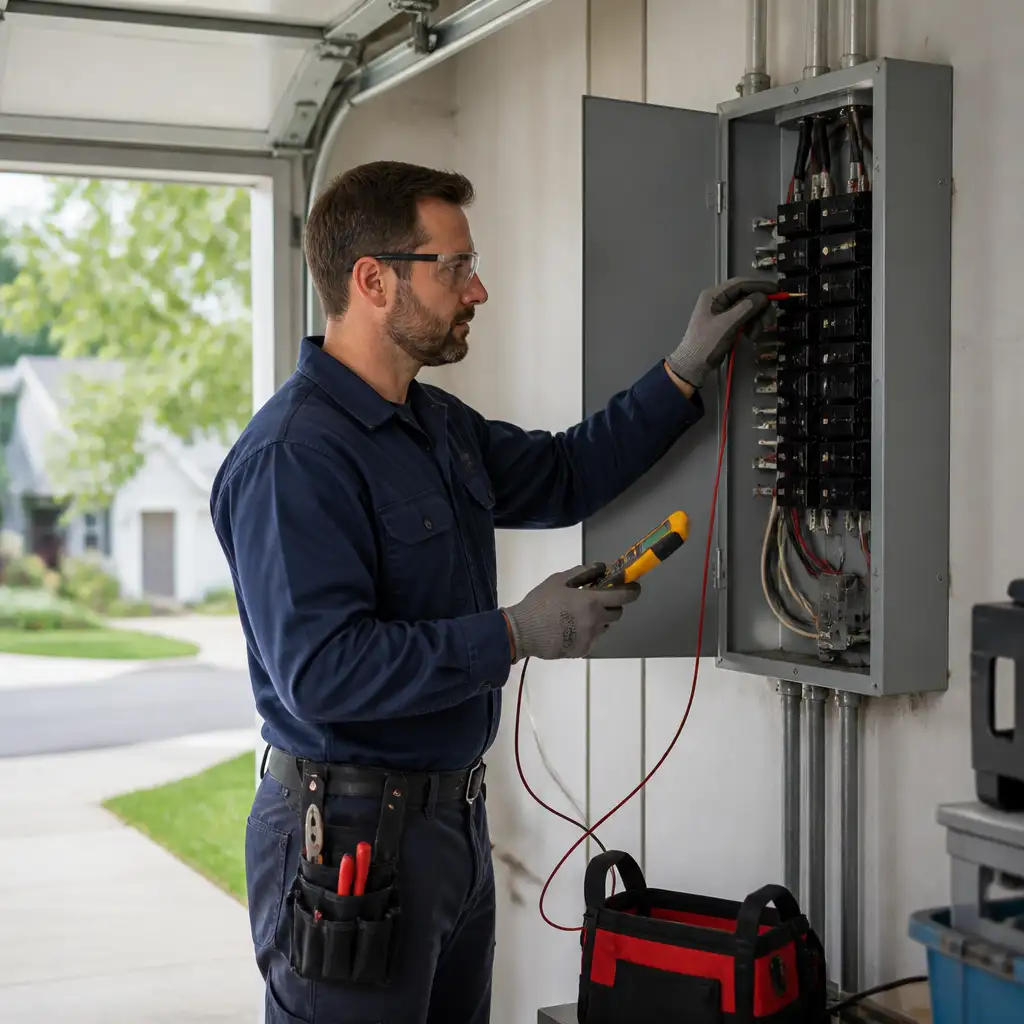
A licensed electrician follows a systematic approach to diagnose frequent breaker trips. First, they assess whether the issue is an overload, a short circuit, or a ground fault. That involves evaluating the circuit’s load, inspecting visible wiring and terminations, and testing breakers and protective devices. For Lake Norman and Cornelius homes, an electrician will also consider environmental factors like moisture or rodent damage.
Next, the electrician inspects the breaker panel itself. Panels and breakers wear over time; loose connections, corrosion, or an undersized main service can cause nuisance trips or unsafe conditions. The electrician will look for signs of overheating, discoloration, or back-fed circuits that may indicate previous improper work. Confirming that AFCI and GFCI devices are present and functioning is particularly important in modern code compliance.
Testing includes circuit-by-circuit evaluation, using metering to measure load and identify abnormal current flows. If an appliance or device is a suspect, the electrician may isolate the circuit and test it under controlled conditions. Based on findings, recommended next steps could include replacing a faulty breaker, redistributing loads, adding a dedicated circuit, or planning a panel upgrade. These actions should always be performed by a licensed, insured electrician familiar with National Electrical Code requirements.
When tripping is caused by appliances or equipment
Appliances and major equipment are frequent culprits when breakers trip repeatedly. In Lake Norman homes, common causes include pool pumps, HVAC compressors, older refrigerators, electric water heaters, EV chargers, and dock or boat lift motors. These devices draw significant current during startup and operation; if they share circuits with general loads, breaker trips can result.
When you suspect an appliance, take note of timing: does the trip occur when the HVAC cycles, or when the pool pump switches on? If so, avoid using the appliance until a professional inspects it. Do not open or repair appliances yourself. Instead, document the symptoms — unusual noises, burning smells, or visible wear — and relay them to your electrician. This information speeds diagnosis and helps identify whether the appliance itself needs repair or if the home’s wiring requires an upgrade.
If you are planning an addition like a home EV charger or a workshop with heavy tools, these require dedicated circuits and capacity planning. ElecTek provides comprehensive residential electrical services including EV charger installation and dedicated-circuit work to ensure appliances operate safely without overloading home circuits.
Timing and scheduling professional troubleshooting in Cornelius and Lake Norman
Not every breaker trip is an emergency, but certain patterns call for immediate attention. Call a licensed electrician right away if trips are accompanied by burning smells, visible smoke, sparks, or if the breaker will not reset at all. For persistent or unexplained trips, schedule a prompt troubleshooting visit rather than delaying — intermittent faults can worsen and may cause damage to appliances or create safety hazards.
For non-emergency but recurrent issues, a same-week appointment is usually appropriate. When contacting a professional, provide details: which circuits are tripping, the frequency, any related appliances, and whether outdoor or dock circuits are involved. This helps the electrician prepare tools, testers, and replacement parts if needed.
To book a visit, use ElecTek’s appointment page to book an appointment. ElecTek is licensed, insured, and bonded, and serves Cornelius, NC and the Greater Lake Norman community with prompt, code-conscious residential electrical troubleshooting and repairs. Professional scheduling ensures safe diagnostics and efficient resolution.
Preventing future trips: panel upgrades and practical improvements for lake-area homes
Long-term prevention focuses on matching electrical capacity to your household’s needs and protecting circuits with modern safety devices. Many Lake Norman homes built decades ago have fewer circuits than modern households require. Upgrading to a larger service, installing new breakers with AFCI/GFCI protection where required, and adding dedicated circuits for high-demand appliances can significantly reduce nuisance trips.
Other practical improvements include relocating panel equipment out of damp areas, sealing penetrations that allow moisture into conduit runs, and using corrosion-resistant hardware on docks and outdoor equipment. If you have an older fuse or two-pole breaker panel, replacement with a modern panel can improve safety and load management. ElecTek works with homeowners on panel upgrades, generator wiring, and other solutions that balance capacity, safety, and budget considerations.
Preventive maintenance also helps: periodic inspections before storm season and after high-humidity months can identify developing issues, especially on waterfront properties. For more homeowner education and related guidance, consult our electrical articles for topics like panel care, GFCI/AFCI guidance, and safe EV charger planning in North Carolina homes.
Frequently Asked Questions
Q: My breaker trips whenever I run the microwave and the toaster together. Is that an emergency?
A: Not necessarily an emergency, but it indicates an overloaded circuit. Avoid using both at once and call a licensed electrician to evaluate whether you need a dedicated circuit or redistribution of loads. A professional can safely measure circuit load and recommend the right solution.
Q: Breakers trip only during heavy rain — could moisture be the cause?
A: Yes. Moisture can create ground faults, especially on exterior outlets, pool equipment, or dock wiring. Stop using outdoor circuits until they are inspected. Schedule professional troubleshooting to locate and repair the moisture entry point and test protective devices.
Q: How do I know when to replace a breaker versus upgrading the panel?
A: A licensed electrician will inspect the breaker and panel condition. A single faulty breaker may be replaced, but older panels with recurring issues, signs of overheating, or insufficient capacity usually benefit from a panel upgrade. Professional assessment ensures the remedy meets code and your home’s needs.
Not sure what is causing an electrical issue in your home? ElecTek offers professional troubleshooting, inspections, repairs, and residential electrical service for homeowners in Cornelius, NC and the Greater Lake Norman community. Call 704-506-4205 or email trish@electekinc.com to request help from a licensed electrical contractor.