
Introduction
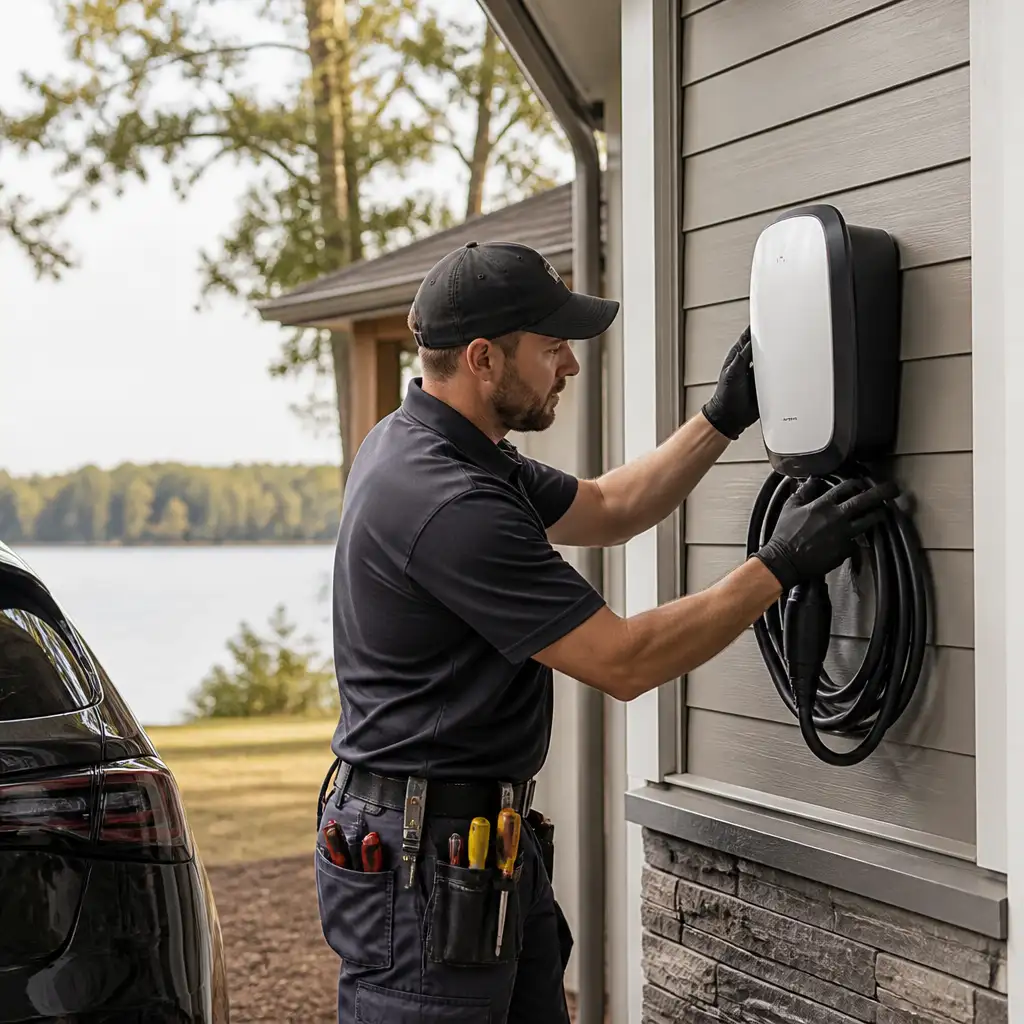
Installing an EV charger at a lake house or a detached garage in Lake Norman, NC requires more planning than plugging in a cord. Homeowners face unique site conditions—long cable runs from the house to a garage, wildlife- and weather-exposed outdoor equipment, and local permitting requirements—that affect cost, performance, and safety. This article explains practical considerations for EV charger installation Lake Norman NC homeowners should know before making decisions.
Whether you own a waterfront property on Lake Norman or a home in nearby Cornelius, NC, the electrical work should meet National Electrical Code (NEC) standards and local inspection rules. Proper planning addresses how to route long cables, whether trenching or conduit is needed, charger placement for weather protection, and how to verify your meter and panel can support a dedicated EV circuit.
ElecTek, Inc. helps homeowners navigate these factors with licensed, experienced electricians who understand local permitting and the Greater Lake Norman environment. For detailed service options related to EV charger installation or home electrical upgrades, see our electrical contracting services page.
In the sections that follow we cover cable routing and charger placement, trenching and conduit, outdoor weatherproofing, meter and panel options, permitting and NEC considerations, and guidance on when to call a licensed electrician. The goal is to help Lake Norman and Cornelius homeowners make informed choices without encouraging unsafe DIY work.
- Introduction
- Planning cable runs and charger placement
- Trenching, conduit and underground wiring considerations
- Outdoor weatherproofing and charger mounting at lake houses
- Meter, panel options, and dedicated circuit requirements
- Permits, inspections, and NEC compliance in Lake Norman
- When to call a licensed electrician and what to expect
- Frequently Asked Questions
Planning cable runs and charger placement
Start by mapping the shortest practical route from your main panel to the charger location. Long cable runs from a house to a detached garage or boathouse can add material and labor costs and can influence voltage drop. For many Lake Norman properties, the garage or dock may sit a substantial distance from the main service; understanding run length early helps determine conductor size and whether a subpanel is necessary.
Charger placement is both a convenience and safety decision. Locate the charger where the vehicle will park most often, while also considering protection from direct exposure to wind-driven rain, sun, and lake spray. At a detached garage, a wall-mounted or pedestal charger inside a sheltered area reduces weatherproofing challenges. At a lake house with a dock or carport, choose a mounting location that minimizes the distance the charging cable needs to reach while maintaining code-required clearances.
Plan for cable routing options such as overhead, underground, or through an existing crawl space. Overhead runs can be less expensive but may be subject to local utility restrictions. Underground runs that cross a yard or driveway likely require trenching and conduit; these routes often provide a neater appearance and better long-term protection for conductors but require additional excavation work.
Trenching, conduit and underground wiring considerations
Many Lake Norman homes require trenching to reach a detached garage, garage apartment, or dock. Trenching depth, conduit type, and warning tape requirements are determined by local code and the conductors used. Using conduit for underground runs protects wiring from moisture, shifting soil, and future digs. Rigid or schedule 40/80 PVC conduit is commonly used for residential installations, but conduit sizing should match the conductors and anticipated future capacity.
Trenching across lawn or landscaped areas also raises questions about restoration and tree roots. A professional electrician coordinates with homeowners about landscaping restoration and where to avoid major roots or irrigation lines. If a route crosses a driveway, deeper trenches or protective conduit encasement may be required to meet load-bearing and safety standards.
For installations near a shoreline or dock, soil conditions and seasonal water tables can affect trenching plans. Wet soils may require different conduit or a raised subpanel location to keep equipment clear of potential flooding. These site-specific factors are why many homeowners in Cornelius and Lake Norman prefer to consult a licensed contractor early in planning.
Outdoor weatherproofing and charger mounting at lake houses
Weatherproofing is a top concern for Lake Norman properties. Chargers installed outdoors must be rated for outdoor use and mounted with manufacturer-recommended enclosures or protective covers when exposed to wind-driven rain or salt-laden air. While Lake Norman is freshwater, the lakeside environment still exposes equipment to humidity, spray, and sun; choosing a UL-listed outdoor-rated charger and proper mounting hardware extends service life.
Mounting options include wall mounts, pedestals, or post-mounted solutions. For docks or boathouse installations, select corrosion-resistant materials and elevated mounting points above likely water levels. Cable management is also important: integrated cable holders, retractors, or hook points keep cords off the ground and reduce trip hazards near waterfronts.
Electrical enclosures for outdoor locations should include GFCI protection and weatherproof conduit terminations. The charger location should allow for airflow and service access while minimizing direct exposure to the elements. A licensed electrician can recommend site-specific accessories—such as weatherproof in-use covers, heated enclosures, or dedicated breaker configurations—that meet NEC guidance and local inspection expectations.
Meter, panel options, and dedicated circuit requirements
Most Level 2 EV chargers require a dedicated 240V circuit with appropriate amperage. Before installation, assess whether the existing service and main panel can support a new dedicated circuit. Older homes around Lake Norman may have limited spare breaker spaces or a lower service ampacity, which leads to choices like adding a subpanel at a detached garage, performing a service upgrade, or installing a load-management device.
A subpanel near the detached garage can reduce long cable runs and allow localized overcurrent protection. In some cases, utilities or inspectors prefer a meter socket-fed subpanel or a separate meter for a secondary structure; these options depend on local utility policies and property configuration. Discussing meter and panel options early helps homeowners avoid costly rework.
Voltage drop is a practical concern with long runs. To maintain charger performance, electricians may upsized conductors or install a subpanel near the charger to keep voltage within acceptable ranges. A licensed electrician will calculate conductor size, breaker sizing, and grounding requirements based on NEC standards and the specific charger model’s nameplate ratings.
Permits, inspections, and NEC compliance in Lake Norman
Permitting and inspection processes protect homeowners and ensure installations meet NEC and local codes. In the Lake Norman area, permit requirements vary by municipality, but most residential EV charger installations require an electrical permit and a final inspection. Charging equipment that alters service ratings, requires a service upgrade, or involves new meter work often triggers additional permitting steps with the local authority having jurisdiction.
NEC sections relevant to EV charging address dedicated circuits, grounding and bonding, GFCI/AFCI protection, and outdoor equipment ratings. While this article is educational, it’s important to rely on a licensed electrician to interpret and apply these NEC requirements to your property. ElecTek’s technicians work to ensure installations are code-conscious and prepared for inspection.
Local inspection offices in Cornelius and surrounding Lake Norman towns may also require documentation from the charger manufacturer or electrician, such as load calculations and wiring diagrams. Early coordination with permitting authorities can reduce delays. When in doubt, plan for permitting as part of the upfront project timeline to avoid surprises.
When to call a licensed electrician and what to expect
Call a licensed electrician when planning any permanent EV charger installation. Electrical work involving service panels, meter modifications, trenching for underground feeders, or outdoor equipment subject to weather should be performed by qualified professionals. A licensed electrician ensures work is safe, meets NEC standards, and is permitted and inspected as required.
Expect a qualified contractor to start with a site visit. During the visit, the electrician will evaluate your main service capacity, panel space, recommended charger location, the need for trenching or conduit, and any potential permitting restrictions. The electrician should also discuss timeline, material options, and a clear estimate. In Cornelius and the Greater Lake Norman area, homeowners benefit from crews familiar with local permit officials and inspection practices.
Choose an electrical contractor that is licensed, insured, and bonded. ElecTek, Inc. holds North Carolina license 27358 and carries insurance and bonding to protect homeowners during residential projects. A reputable electrician will also provide a written estimate, explain NEC considerations, and coordinate necessary inspections so your EV charger installation meets both safety and local regulatory expectations. To schedule a site visit, you can book an appointment online.
Frequently Asked Questions
Q: How long does it take to install a home EV charger at a detached garage in Lake Norman?
A: Installation time varies with site complexity. A simple garage install with available panel capacity can often be completed in a day, while projects requiring trenching, a subpanel, or a service upgrade may take multiple days plus permitting time. A site visit provides a more accurate timeline.
Q: Do I need a permit to install an EV charger in Cornelius, NC?
A: Most residential EV charger installations require an electrical permit and inspection. Requirements can vary by town, so it’s best to work with a licensed electrician who handles permits and inspections on your behalf.
Q: Can I use a generator or a portable outlet to charge an EV at a lake house?
A: Temporary solutions may be possible for short-term use, but permanent charging requires a dedicated circuit and code-compliant installation. Portable or improvised connections can pose safety risks. For safe, reliable charging at a lake house or detached garage, schedule professional installation with a licensed contractor who understands local code and site conditions.
Planning an EV charger, generator, renovation, or electrical upgrade? ElecTek helps homeowners throughout Cornelius, NC and the Lake Norman area make safe, code-conscious electrical decisions. Call 704-506-4205 or email trish@electekinc.com to discuss your project.