
Introduction
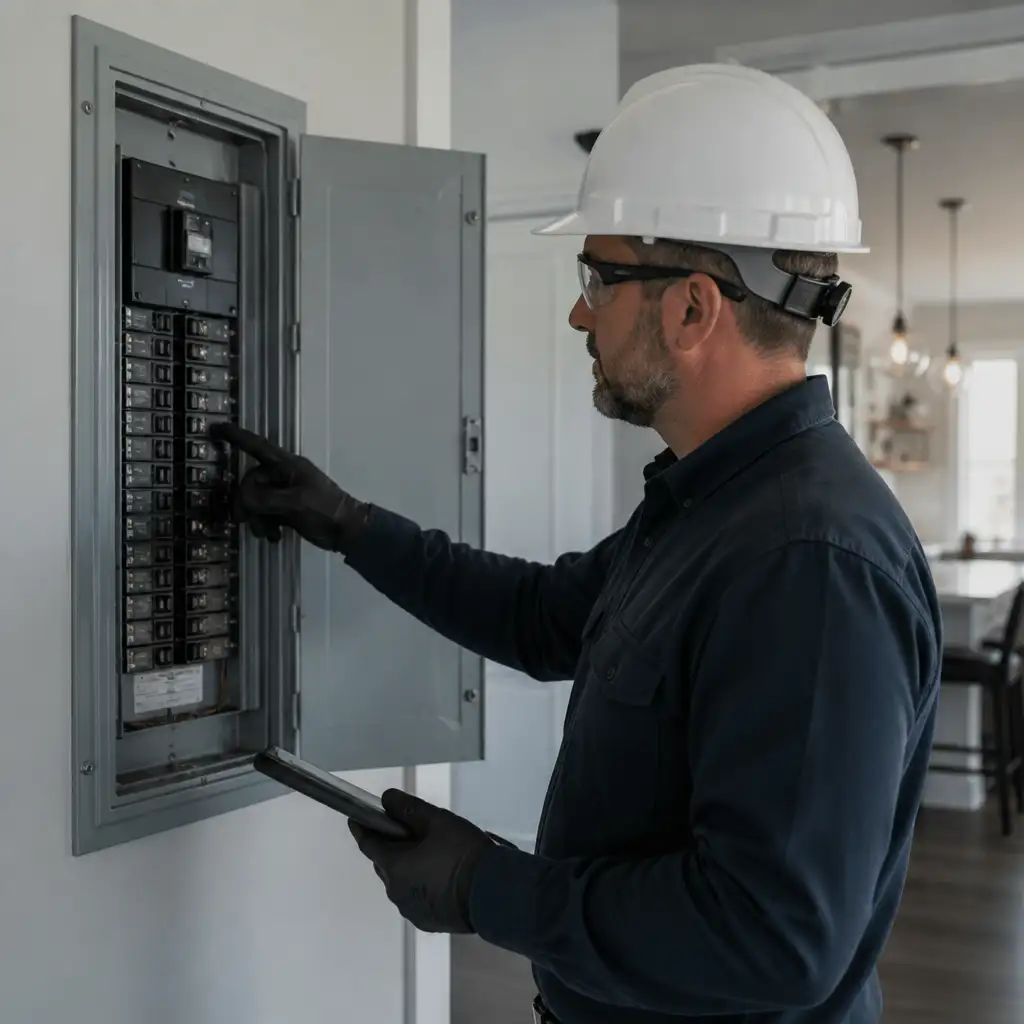
As more Lake Norman homeowners add electric vehicles, home automation, and standby generators, electrical panels and circuits can reach their limits. Choosing the right time for smart home electrical upgrades Cornelius NC helps protect appliances, manage energy costs, and keep essential systems running during outages. This article explains the options—from smart breakers and load shedding to generator monitoring and EV charging schedules—so you can decide when an upgrade makes sense for your home.
Whether you own a waterfront property near Lake Norman, are planning a renovation, or recently bought a home in Cornelius, NC, understanding how smart energy management works will help you avoid surprises and keep the family safe. We focus on practical, homeowner-friendly guidance that emphasises safety and National Electrical Code (NEC) considerations without unnecessary jargon.
Key takeaways include how smart breakers can communicate with home automation, when load-shedding systems are worth the investment, how to integrate EV charging without overloading your panel, and what generator monitoring adds during storms or outages. We’ll also point out when it’s time to call a licensed electrician for an inspection or an upgrade, and how ElecTek supports local homeowners with professional, code-conscious service.
Read on for real-world examples and practical signs that your home may benefit from smart electrical upgrades in Cornelius, NC and the Greater Lake Norman area.
- Introduction
- Why homeowners in Cornelius, NC are upgrading for smarter power management
- Smart breakers and panel communication: what they do and when to install them
- Load shedding and load management: preventing overloads and prioritising circuits
- Integrating EV charging: scheduling, dedicated circuits, and capacity planning
- Generator monitoring and transfer switches: keep essentials powered during outages
- Automation, scheduling, and real‑world benefits for Lake Norman homes
- Frequently Asked Questions
Why homeowners in Cornelius, NC are upgrading for smarter power management
Local trends—more EV ownership, larger home entertainment systems, and increased adoption of smart appliances—mean many Cornelius, NC homes are using more continuous and high-power loads than a decade ago. Older panels and conventional breakers weren’t designed with two EV chargers, whole-house HVAC automation, and a standby generator in mind.
Upgrades aren’t just about capacity: they’re about resilience and control. Smart electrical upgrades allow homeowners to monitor energy use, avoid nuisance trips, and prioritise what stays powered during an outage. For waterfront or Lake Norman homes that depend on pumps, freezers, or medical equipment, that kind of control can be especially valuable.
A professional assessment can reveal whether a full panel upgrade, a subpanel, or targeted smart devices will serve your needs. ElecTek offers residential electrical services that include inspections and planning to determine the most practical, code-compliant approach for your property. If you’re exploring options for EV charging or generator wiring, a site visit is the right first step.
Smart breakers and panel communication: what they do and when to install them
Smart breakers are circuit breakers with communication or monitoring features that report loads and can respond to automated commands. They’re often installed in modern panels to provide data on which circuits are drawing power and to allow remote or automatic control for load balancing. For homeowners, the main benefits are visibility and the ability to prioritise circuits without rewiring.
Consider smart breakers when your panel is nearing capacity, you want to monitor high-drain circuits like EV chargers or HVAC units, or you’re planning a remodel that will add new loads. Smart breakers can be paired with home energy management systems to create rules—such as temporarily lowering pool heater power when the EV charges—without human intervention.
Installation requires a licensed electrician to confirm compatibility with your existing panel and to follow NEC requirements. If your panel is older or reaches the manufacturer’s rated spaces, the safer option may be a panel upgrade or adding a subpanel. ElecTek can evaluate whether smart breakers are the right fit or if a service upgrade is necessary to meet your goals.
Load shedding and load management: preventing overloads and prioritising circuits
Load shedding is a strategy where non-essential circuits are automatically reduced or turned off to prevent a panel or meter from being overloaded. In practice, this means programming the system to shed a pool heater, hot tub, or EV charging when the household hits a set threshold so critical circuits—like refrigeration, medical devices, or communication equipment—remain powered.
Homeowners often consider load management when they notice repeated breaker trips after adding a high-capacity device, or when they want to avoid the expense and disruption of a full service upgrade. Load-shedding systems can be integrated with smart breakers, EMS (energy management systems), or standalone controllers that communicate with smart chargers and home automation platforms.
From a safety and code perspective, load-shedding installations must be performed by a qualified electrician. NEC rules and local utility standards guide how automatic transfer and load-interrupting devices are installed. A licensed contractor will size equipment properly and ensure that protective devices remain accessible and labelled according to code.
Integrating EV charging: scheduling, dedicated circuits, and capacity planning
EV charging is a common catalyst for electrical upgrades. Level 2 chargers typically require a dedicated 240V circuit and can draw 30–50 amps or more depending on vehicle and charger type. Before adding a home charger, a load calculation and panel review determine whether your home can accommodate the charger on existing capacity or needs an upgrade.
Smart charging and scheduling let homeowners avoid peak demand or coordinate charging with lower-cost times. Scheduling can also be used alongside load-shedding to temporarily reduce charging rate if higher-priority circuits need power. For Lake Norman homeowners who may also operate electric boat lifts or dock loads, coordinating those demands reduces the chance of nuisance trips.
Permitting and safe installation matter. A licensed electrician will install a dedicated circuit, perform necessary permitting, and ensure the charger location meets code for clearances and GFCI/AFCI protection where required. ElecTek provides EV charger installation and can advise whether a panel upgrade, subpanel, or smart load management device is the most practical route for your home.
Generator monitoring and transfer switches: keep essentials powered during outages
Backup generators remain an important resilience tool in North Carolina, especially during storm season. Whole-home or essential-circuit standby generators rely on transfer switches to safely disconnect the home from the utility before feeding power. Modern generator monitoring adds remote status, runtime logs, and programmable priorities—helpful for Lake Norman homes that depend on sump pumps or refrigeration.
Generator monitoring paired with load management can coordinate generator output to prioritise essential circuits. For example, a generator may power heating, refrigeration, and selected outlets while non-essential circuits remain off. This ensures the generator is not overloaded and operates efficiently for longer runtimes.
NEC and manufacturer guidance govern transfer switch installations and generator connections. A licensed, insured electrician should size the generator, choose the correct transfer switch, and handle fuel, exhaust, and placement considerations. ElecTek works with homeowners to plan Generac and other equipment installations and to wire systems that meet local code and practical homeowner needs.
Automation, scheduling, and real‑world benefits for Lake Norman homes
Smart home electrical upgrades are not only technical improvements—they deliver everyday conveniences and savings. Examples from local homeowners include scheduling EV charging overnight to take advantage of lower rates, automatically reducing pool heater power during peak usage, and monitoring freezer circuits remotely while away for a weekend on the lake.
Automation also helps manage maintenance and safety. Remote monitoring can alert homeowners to abnormal current draw that may signal a failing motor, and scheduled testing of generator auto-start functions ensures reliable operation before storms hit. For renovation projects, early electrical planning with builders and architects prevents costly rework and ensures the electrical infrastructure supports intended automation features.
If you’re planning a remodel or new construction, collaborate with professionals who understand integrated systems. ElecTek partners with builders and architects to provide electrical planning and installation that aligns with lighting design, automation plans, and code requirements. For existing homes, a targeted upgrade can often deliver much of the benefit of a full retrofit at lower cost and with less disruption.
Frequently Asked Questions
Q: How do I know if my panel needs a full upgrade versus adding smart breakers or a subpanel?
A: A licensed electrician should perform a load calculation and inspect your panel age, available spaces, and manufacturer ratings. If the panel is near capacity, lacks spaces for required breakers, or shows signs of wear, a full service or panel upgrade may be recommended. Smart breakers and subpanels are useful when the service capacity is sufficient but circuit management or monitoring is needed. ElecTek can evaluate your setup and recommend a code-compliant, practical solution.
Q: Can I schedule EV charging to avoid overloading my home during high use?
A: Yes. Many smart chargers and energy management systems allow time-of-use scheduling and dynamic load adjustment. When combined with load-shedding or smart breakers, charging can be reduced or paused automatically to prevent trips while keeping essential circuits active. Proper installation by a licensed electrician ensures the charger circuit, protections, and communication features meet NEC requirements.
Q: Are generator integrations and smart home upgrades compliant with NEC and local code?
A: When installed by a licensed, insured electrician, generator integrations, transfer switches, and smart electrical devices can be fully compliant with NEC and local permitting requirements. Compliance depends on correct equipment selection, proper wiring, and following manufacturer and code instructions. ElecTek emphasises safety-first workmanship and works to ensure installations meet all applicable standards for Cornelius, NC and the Greater Lake Norman area.
Planning an EV charger, generator, renovation, or electrical upgrade? ElecTek helps homeowners throughout Cornelius, NC and the Lake Norman area make safe, code-conscious electrical decisions. Call 704-506-4205 or email trish@electekinc.com to discuss your project.